REVIEW · MALTA
First scuba diving experience with instructor – Malta
Book on Viator →Operated by DiveBase Malta · Bookable on Viator
That first moment underwater can feel weird. In Malta, this PADI Discover Scuba intro turns the nerves into a calm, step-by-step plan. You spend a half-day learning the basics, then getting time in both shallow and open water.
What I like most is the personal coaching. Instructors such as Antonio, Davide, and Georgia get repeated praise for clear explanations, patience when breathing feels tricky, and a steady safety mindset. You’re not thrown in the deep end of the experience—your skills come first.
A real drawback to note: this is still physical and medical. You need solid basic swimming, you should be in good health, and if you have respiratory or certain medical conditions, you may not be able to take part. Also, language matters more than you might expect, since explanations can be in English and Italian.
In This Review
- Key moments that make this Malta intro feel worth it
- Malta’s first-time scuba session: what you’re really signing up for
- Meeting point in St. Paul’s Bay and how the 3 hours usually unfold
- Gear basics: what you practice before you go further
- Shallow skills first, then open-water time for real marine sightings
- The instructor makes or breaks your first session
- Certificate of Achievement: what it gives you (and what it doesn’t)
- Price and value: what you’re getting for what you pay
- What to bring (and what surprises to expect)
- Health rules and the 12-hour flight warning
- Common hiccups (and how to avoid them fast)
- Language mismatch
- Breathing nerves
- Being late or unprepared
- Gear handling expectations
- Should you book this Malta first-time scuba session?
- FAQ
- How long is the PADI Discover Scuba experience in Malta?
- Where do I meet for the session?
- What’s included in the price?
- What will I learn during the training?
- Who can participate, and who should avoid it?
- When should I fly after the experience?
Key moments that make this Malta intro feel worth it
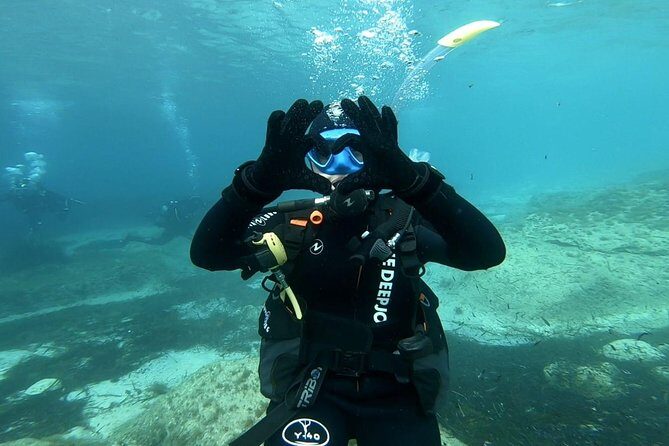
- 3 hours total: briefing, equipment setup, then practice in the water, followed by time outside the training zone
- Small-group vibe: capped at up to 8 participants, which usually means you get closer attention than in big classes
- You learn the usable skills fast: equipment use, pressure equalizing in ears, fin control, comfort under water, and hand signals
- You’re likely to see real marine life: local fish up close, and in some cases an octopus sighting
- Instructor quality is the star: repeated mentions of Antonio and Davide being encouraging, and Georgia being especially good at beginner clarity
- You must come prepared health-wise: medical forms, health restrictions (including active asthma), and the 12-hour flight wait after the session
Malta’s first-time scuba session: what you’re really signing up for
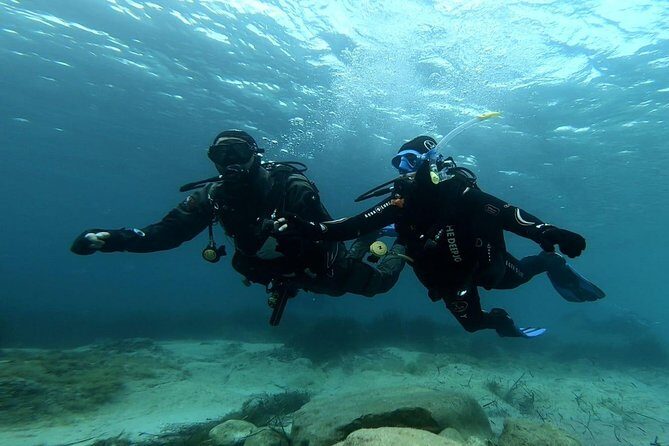
This experience is built around the PADI Discover Scuba model. Translation: you’re not trying to “be a diver” right away. You’re learning how scuba gear works, how your body behaves under water, and how to communicate with simple hand signals.
Malta is a great choice because the setting is coastal and the training is designed for beginners. Your session is set up to feel calm and controlled—especially if this is your first time with fins, a regulator, and that pressure-shift feeling in your ears.
In the best feedback, the instructors don’t just teach. They manage the emotional side too. When someone struggles to breathe calmly under water, the approach highlighted in the reviews is patience plus repetition until it clicks.
Other scuba diving and snorkeling tours we've reviewed in Malta


Meeting point in St. Paul’s Bay and how the 3 hours usually unfold
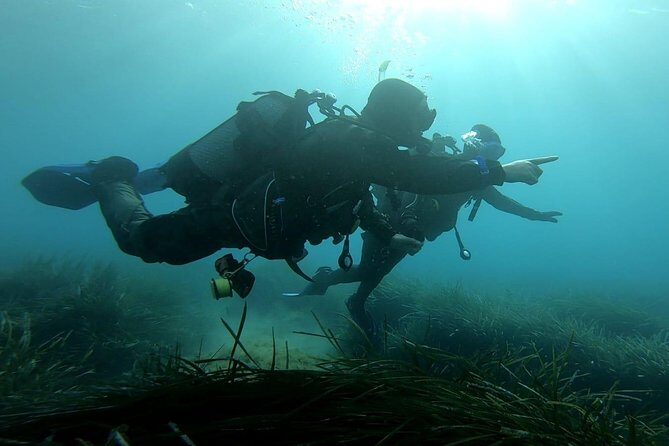
You meet at 25 Islet Promanade, St. Paul’s Bay SPB 2506, Malta. The tour finishes back at the same place. This matters because you can plan your day without a long commute or a complicated route across the island.
The full experience runs about 3 hours. That total typically includes:
- the briefing on land
- equipment fitting and setup
- practice time in the water (first in a controlled, shallow setting)
- additional time in more open water once everyone is ready
One detail I’d take seriously: timing and readiness. If you arrive late or if your paperwork isn’t ready, it can shrink the time you get in the water later. Since the course pace depends on everyone in the group, arriving on time is not “nice to have.” It’s the difference between a smooth first session and a rushed one.
Gear basics: what you practice before you go further
Before you spend time outside the training zone, you’ll learn the core mechanics. The goal is simple: you should feel in control, not like you’re guessing what the equipment is doing.
You’ll cover:
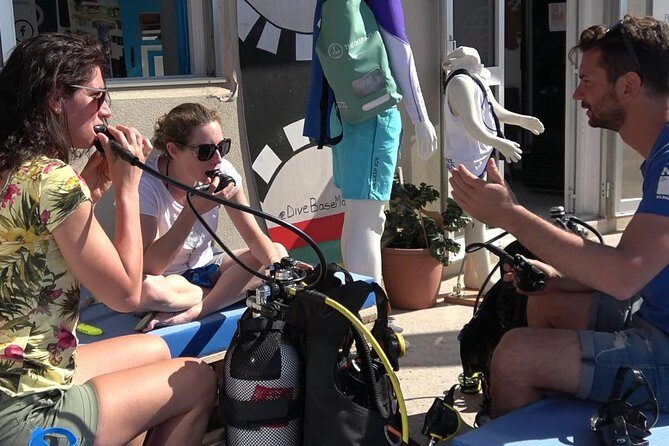
- how to use the scuba equipment correctly
- how to equalise pressure in your ears (so your head feels less like it’s being squeezed)
- how to feel at ease underwater
- how to swim with fins without fighting the water
- which hand signals to use so communication stays clear
This is also where a good instructor earns their keep. The reviews consistently mention instructors being thorough with explanations and calm in the moment. That’s important because beginner panic usually happens when you don’t know what’s coming next.
If you’re the type who gets nervous about breathing, pay attention to how the instructor demonstrates. The strongest feedback includes instructors who keep things encouraging while you try again and again—especially if your body is still learning the rhythm.
Shallow skills first, then open-water time for real marine sightings
The training is split across controlled water learning and then more open-water time. That structure is the reason this works for first-timers: you build competence before you chase underwater views.
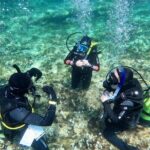
During the early practice, you’ll focus on comfort and technique: regulator control, fin movement, buoyancy basics, and hand-signal communication. Once you meet the requirements, you get time in open water.
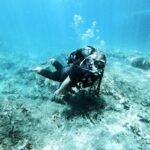
That open-water section is when Malta’s underwater world shows up in a more satisfying way. Multiple reviews mention seeing local fish up close, and at least one person mentions an octopus sighting. You don’t need to be an expert to enjoy that moment. You just need to be calm enough to look around while you’re working the basics.
Depth varies by how quickly your group gets comfortable. One review mentions reaching about 7 meters, which gives you a rough sense of what confident beginners can sometimes achieve during this format.
The instructor makes or breaks your first session
In a course like this, the instructor is the product. You’ll see it reflected in the ratings: the best experiences call out professional, friendly instruction, humor in explanations, and safety-first coaching.
Names that come up often:
- Antonio: praised for patience, clear and professional teaching, and confidence-building
- Davide: praised for being informative and encouraging, especially with beginner nerves
- Georgia: praised for making everything easy to understand as a beginner
And there’s an important detail hiding in the praise: translation help matters. One group specifically mentioned Emilie translating well, which suggests the instruction can be adapted if language becomes a barrier.
That’s also where the weaker reviews point to a lesson: if you’re not comfortable in English (or Italian), you should plan on relying on body language plus your group’s pace, not just your own guessing. If you’re unsure, bring a partner who can translate, or practice a few scuba basics like hand-signal meaning and the key safety instructions.
Other scuba diving tours in Malta
Certificate of Achievement: what it gives you (and what it doesn’t)
At the end, once you complete the requirements, you receive a PADI Discover Scuba Diving Certificate of Achievement. The important part isn’t the paper—it’s what it enables.
This certificate is described as valid and recognized worldwide, and it’s positioned as a stepping stone. With it, you may continue your education and move toward becoming a certified scuba participant.
What it doesn’t do: it doesn’t replace real certification training. Think of it as a confident beginning—perfect if you want to test whether underwater exploration is your thing before committing to more formal steps.
Price and value: what you’re getting for what you pay
Your listing shows a price of $0.00, which is likely a promo or placeholder. Either way, here’s how to judge value using what’s clearly included.
You typically get:
- use of scuba equipment
- diving insurance
- an instructor
Not included:
- your own swimsuit
- a towel
That mix matters. In many places, equipment rental alone can make an intro experience expensive. Here, equipment plus insurance plus instruction are bundled, which is why it can feel like good value even if the price isn’t “cheap-cheap.”
One more practical value point: this is structured as a half-day skill-builder, not just a quick look. The more serious part is the training—learning pressure equalization and the communication system—so you leave knowing how to manage the basics next time.
What to bring (and what surprises to expect)
Bring the simple basics:
- a swimsuit (since you’ll need to be in water-ready gear)
- a towel
Also consider wearing something you can change into fast after. The course is about 3 hours total, and you’ll want to be comfortable on the return.
Now, the surprise: after the session, you may be asked to rinse your wetsuit, fins, and masks. That’s mentioned as part of hygiene and educational practice. One negative feedback story focused on this requirement and the solution used for cleaning, so don’t assume it’s optional. It’s part of how scuba gear stays clean and how the operation keeps things manageable for everyone.
About photos: there’s no automatic photo package included. If you want photo help, it’s described as something you’d need to arrange in advance (and it may require extra staffing).
Health rules and the 12-hour flight warning
This is the part you don’t want to treat lightly. Participation requires you to be in good health, and you must have sufficient swimming skills.
The data also lists clear disqualifiers:
- not suitable with respiratory problems, including active asthma
- not suitable with blood and heart related problems
- not suitable if you had surgery in the past year
A doctor’s statement might be requested in particular cases.
Even if you’re generally healthy, you should expect medical forms to be part of the process. One review and one response both highlight that medical forms can delay or complicate the start if they aren’t ready when you arrive.
Finally, after the dive is concluded, you should wait at least 12 hours before taking a flight. That’s not a “suggestion for comfort.” It’s a key safety rule to plan your travel around.
Common hiccups (and how to avoid them fast)
Here are the issues that show up clearly, plus what you can do to prevent them:
Language mismatch
If English or Italian isn’t comfortable, ask before you go. Some groups in feedback mention difficulty understanding instructions. You don’t want to learn safety skills while you’re guessing what words mean underwater.
Breathing nerves
Plenty of beginners find breathing under water hard at first. The best instructors handle this with patience and repetition. Your job is to slow down, follow the instructor’s pacing, and communicate if you feel panicky.
Being late or unprepared
Late arrival and incomplete medical forms can eat into the structured 3 hours. You’ll still get taught, but the schedule becomes less flexible.
Gear handling expectations
Expect some rinsing and care steps for hygiene. Bring your own towel, and plan your day so you’re not scrambling for clean clothes right after.
Should you book this Malta first-time scuba session?
I’d book it if you:
- want a true beginner intro with training, not just a quick water look
- appreciate patient, safety-focused instruction
- like the idea of learning pressure equalization and hand signals before you “go exploring” on your own
- can follow basic instructions and you’re comfortable enough in the water to build control
I would skip it if you:
- have respiratory issues like active asthma
- have blood or heart problems, or surgery within the past year
- need a flight the same day and can’t respect the 12-hour wait
- know your language situation will block safety instruction (unless you can ensure translation support)
If you’re on the fence, this is a smart first step. Malta gives you a memorable payoff—fish sightings and the kind of underwater wonder you’ll remember—while the course keeps you anchored to skills and safety.
FAQ
How long is the PADI Discover Scuba experience in Malta?
It runs for about 3 hours total, including briefing, equipment setup, and the water sessions. The exact timing depends on arriving on time and having medical forms ready.
Where do I meet for the session?
You meet at 25 Islet Promenade, St. Paul’s Bay SPB 2506, Malta. The activity ends back at the same meeting point.
What’s included in the price?
Included are scuba equipment use, diving insurance, and the PADI instructor. You’ll need to bring a swimsuit and a towel.
What will I learn during the training?
You’ll learn how to use the scuba equipment, equalise ear pressure, feel comfortable underwater, swim with fins, and use hand signals to communicate underwater.
Who can participate, and who should avoid it?
You need sufficient swimming skills and good health. It is not suitable for people with respiratory problems (including active asthma), blood or heart related problems, or surgery in the past year.
When should I fly after the experience?
You should wait at least 12 hours after the dive before taking a flight.