REVIEW · MALTA
Valletta City of Gentlemen guided walking tour
Book on Viator →Operated by Silvia -Excursiones en Malta · Bookable on Viator
Valletta feels big, then a guide makes it make sense fast. This short walk is a smart way to learn the city’s layout while you soak up classic photo stops, from the Triton Fountain to the best viewpoints at the Barrakka Gardens. I like that the group stays small (max fifteen), so questions don’t get lost in the crowd, and I like that you get a local perspective that helps you read the buildings instead of just passing them.
One thing to think about: this is a true walking tour, and it also depends on good weather. If you’re the type who wants long breaks or nonstop sitting, plan to book a different kind of experience.
In This Review
- Key points worth knowing before you go
- A 2-hour Valletta walk that starts at Triton Fountain
- Small group touring: what a guide really adds
- Stop 1: Triton Fountain and the 1950s story behind the landmark
- Upper Barrakka Gardens: the Grand Harbour and Three Cities viewpoint
- Lower Barrakka Gardens: Siege Bell and Sacra Infrmeria context
- Strait Street (The Gut): from red light district to dining street
- Grandmaster’s Palace exterior and the Parliament of Malta area
- Price and value: what $23.23 buys you in orientation time
- Weather, walking, and how to be comfortable
- Who this tour fits best (and who might skip it)
- Should you book the Valletta City of Gentlemen walking tour?
- FAQ
- How long is the Valletta City of Gentlemen walking tour?
- Where does the tour start?
- Where does the tour end?
- What time does the tour begin?
- How many people are on the tour?
- Is admission included for the stops?
- What’s included in the price?
- Do I need good weather for this experience?
- Is it a walking tour?
- How does cancellation work?
Key points worth knowing before you go
- Max 15 people keeps the tour conversational and easier to follow.
- Triton Fountain is the perfect starting landmark, with a real backstory tied to the 1950s.
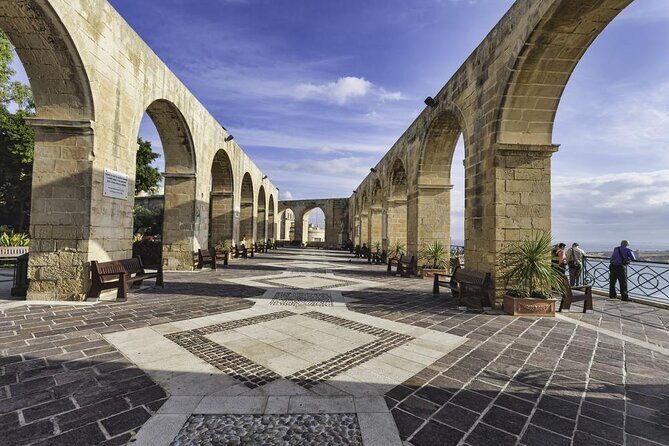
- Upper and Lower Barrakka Gardens give you two different Grand Harbour viewpoints.
- Sacra Infrmeria context (the Knights of St John hospital) turns scenery into story.
- Strait Street shows how places can change roles over time, from The Gut to modern dining.
- You’ll get orientation for major sights like Grandmaster’s Palace, Saint John’s Co-Cathedral, and Parliament of Malta.
A 2-hour Valletta walk that starts at Triton Fountain
This tour is built for people who want a fast, doable introduction. It runs for about 2 hours, starting at 11:00 am at Triton Fountain, and ends at St. George’s Square in front of Republic Street. With that kind of timing, you can fit it into a busy Malta day without feeling like your afternoon is gone.
I like how the route is organized for your legs and your eyes. You begin at Triton Fountain, which is easy to spot, and then you work your way toward the harbour viewpoints at the Barrakka Gardens. From there, you head into the compact streets where Valletta’s character shows up fast—especially around Strait Street.
The tour also uses a mobile ticket, so you’re not hunting for paper on a phone that’s already at 12%. And because it’s a walking tour, you’ll want to wear shoes you trust. Valletta’s streets are part old city, part stone steps, so comfort matters more than style.
Other Valletta tours we've reviewed in Malta


Small group touring: what a guide really adds
The big value here isn’t just checking off famous places. It’s having someone on hand to connect the dots—history, architecture, and what you’re actually looking at.
This tour is capped at 15 travelers, which is the sweet spot for staying engaged. When you can hear the guide without leaning into other people’s conversations, you pick up the details that make a city feel lived-in, not just photographed.
And you get help with local language barriers. That may sound minor, but it changes how you experience Malta once you’re on your own. You leave knowing not only what something is, but how to talk about it and how to spot the important bits again later.
If you’re lucky enough to have Julia as your guide, you’ll see why people rave about the storytelling. In one standout experience, Julia was praised as very personable and strong at turning information into a story you remember. Even when the content is historical, the delivery can make it click.
Stop 1: Triton Fountain and the 1950s story behind the landmark
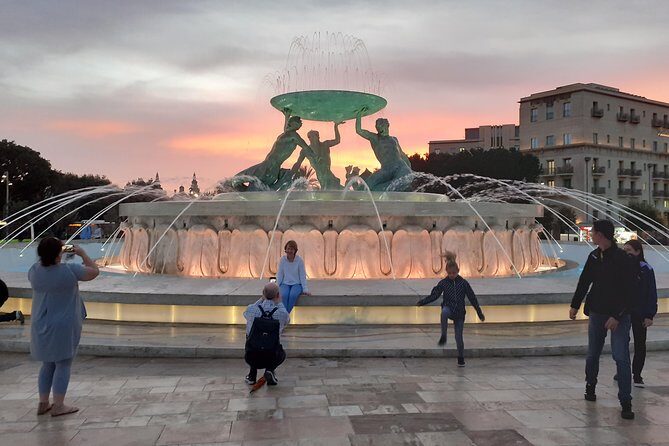
Your tour kicks off at Triton Fountain, designed and constructed between 1952 and 1959. What I find interesting is that it wasn’t a simple “one authority ordered one sculpture” situation. It was conceived jointly by Chevalier Vincent Apap, under no less than three governing bodies. That mix of civic leadership and artistic vision is exactly the kind of context that helps you understand why certain landmarks feel official, symbolic, and central.
You’ll spend about 15 minutes here, and admission isn’t a factor because it’s a public stop. In practice, that means you can take photos without stressing about timing. And since the fountain is a recognizable starting point, it helps you orient yourself right away—important if you’re new to Valletta.
Practical tip: aim to stand where you can see the fountain clearly, then glance around. Triton Fountain sits in a way that lets you quickly get your bearings for the rest of the old city streets.
Upper Barrakka Gardens: the Grand Harbour and Three Cities viewpoint
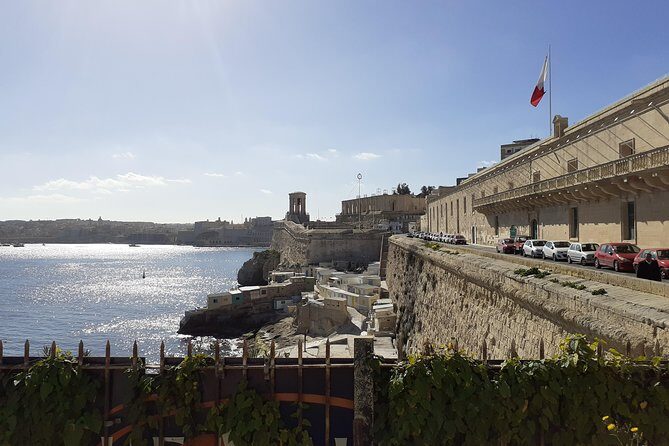
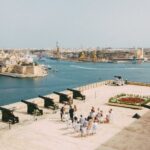
Next up: Upper Barrakka Gardens. This is one of those stops where the city suddenly opens up. You get panoramic views over Grand Harbour, plus a look toward the historical area of the Three Cities.
You’ll also have about 15 minutes here, free to wander within the gardens at a comfortable pace. The “value” of this stop isn’t only the view. It’s what the view teaches you about Valletta’s geography: where the harbour sits relative to the city, and why certain buildings and walls matter.
If you’ve been walking narrow streets and feeling boxed in, this stop resets that feeling. The skyline and water make everything look more planned. You can almost see the logic of the fortifications and where maritime power shaped daily life.
Photo advice: choose one wide shot first, then do a second pass for details. From viewpoints like this, the best pictures often come from simple composition—harbour line, stone edges, and the layered city look.
Lower Barrakka Gardens: Siege Bell and Sacra Infrmeria context
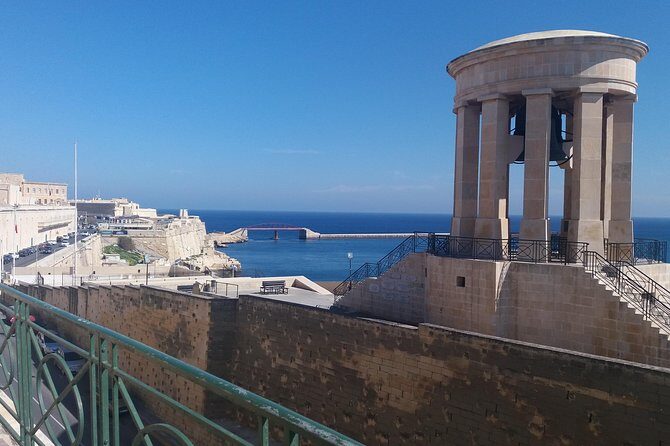
Then you move to Lower Barrakka Gardens, another viewpoint stop with a different feel. Here you can enjoy views of the entrance of Grand Harbour, the Siege Bell, and the Sacra Infrmeria.
What makes Sacra Infrmeria stand out (beyond the name) is the human story tied to it. It was the old hospital of the Knights of St John, and the description you’ll hear links it to healing the sick and wounded without making distinction of creed, race, or social status. That’s a powerful reminder that this wasn’t only about power and warfare. It was also about care, organization, and rules of service.
Today, Sacra Infrmeria holds the Mediterranean Conference Center, and it’s described as the largest conference hall in the Mediterranean sea. That modern use can feel surprising, in a good way. You’re looking at a building that still serves a public role, just in a different era.
You’ll get around 15 minutes at this stop, and again, there’s no admission fee involved because it’s outdoors. Use the time for both the view and the story. If you only take pictures, you miss the point. If you listen, the architecture starts to mean something.
Other walking tours we've reviewed in Malta

Strait Street (The Gut): from red light district to dining street
After the gardens, the tour heads to Strait Street, known in older times as The Gut. Historically, it was Valletta’s red light district. That’s the kind of fact that changes how you read a street—suddenly you’re not just seeing bars and storefronts.
Today, the old bars and haunts have been revamped and converted into trendy spots for dining and wine. The same street energy is still there, but the intent is different. It’s a practical reminder that cities keep their bones while roles shift around them.
This stop is shorter—about 10 minutes—but it works well as a “human scale” break after the big views. You can look at street life, notice how the area is used now, and then keep walking.
If you visit earlier in the day, don’t assume it’s dead. Strait Street is a great place to clock where you’d want to return later for a meal, because it’s already tuned for that.
Grandmaster’s Palace exterior and the Parliament of Malta area
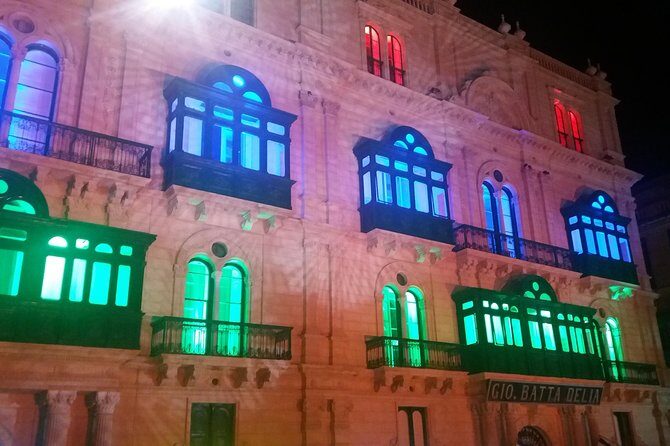
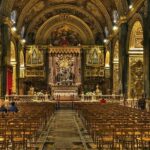
The tour also brings you past major civic and religious landmarks. You’ll see the Grandmaster’s Palace (at least from the outside) and you’ll pass areas tied to Saint John’s Co-Cathedral and the Parliament of Malta.
You’ll get a view from the outside of the Grand Master’s Palace, which has been used ever since as the seat of the government in Malta. Even without going inside, that detail matters. It turns the palace from a “pretty building” into a working symbol of authority.
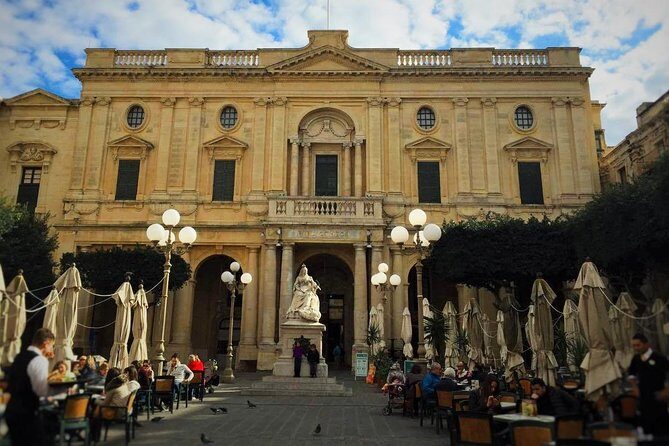
Because this is a short tour, you’re not meant to treat these stops like a full museum visit. Instead, it’s more like a guided orientation walk. The practical payoff is that after two hours, you’ll know where these sites sit and how to route yourself if you want to return later.
If you’re the type who likes to understand what you’re looking at, this section will feel especially useful. The exterior views plus the guide’s narration help you connect the city’s power centers to its streets, walls, and viewpoints.
Price and value: what $23.23 buys you in orientation time
At $23.23 per person, this is priced for a quick win: guidance plus major orientation value, not a deep-ticket museum day. With the tour lasting about 2 hours and including a tour guide, you’re paying for someone to compress a lot of context into a short walk.
I think the best value comes from three things working together:
- Small group size (max fifteen) means you get better interaction.
- Major highlights in one route (fountain, gardens, historic street, and key landmarks you pass by) means less planning.
- Photo-friendly stops spread throughout the walk, so you’re not constantly looking for places to pause.
Also, many stops are free in the sense that you don’t pay admission for the outdoor parts you’re visiting. So your money goes mostly toward the guide’s time and the structure of the experience.
One more practical angle: if you’re arriving in Valletta and feel unsure where to start, this tour acts like a map you can walk through. For first-timers, that can save hours of guesswork.
Weather, walking, and how to be comfortable
This experience requires good weather. When the forecast is rough, plan for the possibility of it being rescheduled or refunded. Since it’s outdoors-heavy (especially the gardens), you’ll want to dress for the conditions.
Because it’s a walking tour, you should be prepared to cover ground at a comfortable pace. You don’t need to be an athlete, but you do need working feet. If you know you’ll tire quickly, it may help to start the day well-rested and to keep your water handy.
Another small but real tip: bring a camera or phone charger plan. You’ll be stopping for photos at the fountain and in both garden viewpoints. Valletta rewards that effort.
Who this tour fits best (and who might skip it)
This is a great fit if you:
- Want a short introduction to Valletta
- Like the idea of a guide helping you understand what you’re seeing
- Prefer a small group tour where you can ask questions
- Are interested in how places connect—gardens, fortifications, historic streets, and governing buildings
It might be less ideal if you:
- Want lots of indoor time or long stays at one site
- Don’t like outdoor walking viewpoints
- Need a tour with lots of seated breaks
If you’re more focused on museum deep dives, you’ll probably need a different kind of day. But for orientation and city context, this does what it promises.
Should you book the Valletta City of Gentlemen walking tour?
I’d book it if you want an efficient, guided path through Valletta’s signature spots without turning your day into logistics. The small group size helps, the route hits key landmarks, and the guide component is where the experience becomes more than a sightseeing loop.
If you’re aiming for value, this tour is a reasonable choice because you’re buying context and direction along with the major photo stops. And if you end up with a guide like Julia, you can also expect storytelling that makes the city feel more understandable as you walk.
FAQ
How long is the Valletta City of Gentlemen walking tour?
It lasts about 2 hours.
Where does the tour start?
The meeting point is Triton Fountain, Vjal Nelson, Il-Furjana, Malta (VGW5+783).
Where does the tour end?
It ends at St. George’s Square on Republic Street, Valletta, Malta (VGX7+JCW).
What time does the tour begin?
The start time is 11:00 am.
How many people are on the tour?
The tour has a maximum of 15 travelers.
Is admission included for the stops?
The tour info indicates free admission for the listed stops.
What’s included in the price?
The tour includes a tour guide.
Do I need good weather for this experience?
Yes. The tour requires good weather, and if it’s canceled due to poor weather, you’ll be offered a different date or a full refund.
Is it a walking tour?
Yes. Most travelers can participate, but you should be able to walk.
How does cancellation work?
You can cancel for a full refund up to 24 hours in advance of the experience start time. If you cancel less than 24 hours before, the amount paid won’t be refunded.