REVIEW · MALTA
Syracuse and Marzamemi Sicily Tour
Book on Viator →Operated by Virtu Ferries LTD · Bookable on Viator
One day, three Sicilian flavors. I love the high-speed catamaran ride that keeps you cool and saves hours, and I also love the chance to see Ortigia Cathedral where a Greek temple became a church through Byzantine, Norman, and Baroque changes. Just know this is an early start and a long day with a lot of coach time between stops.
You’ll depart from Marsa on the Malta side and meet your guides, then switch to a climate-controlled bus on arrival. The day is built around a small group size (up to 15), so you’re not lost in a crowd, and the driver/guide commentary helps you make sense of what you’re seeing along the way.
Sicily gets packed in: Syracuse and Ortygia first, then a traditional fishing-village stop, plus time tied to Mt. Etna and Modica. There’s also an included tasting of Sicilian wine and sweets, which is a nice way to make the long ride feel worthwhile.
In This Review
- Key things to know before you go
- What You’re Paying for (and What Makes It Good Value)
- Marsa to Sicily: The High-Speed Catamaran Start
- The Ferry-Port Reality: Meeting Up and Getting Tickets
- Syracuse and Ortygia: Where a Whole City Acts Like a Museum
- Piazza Duomo and the Duomo di Siracusa: A Building That Rewrites Itself
- Marzamemi: The Fishing Village Stop That Changes the Pace
- Pozzallo as the Loop-Point Back to Malta
- Mt. Etna and Modica: How This Day Gets Its Sicily Sense
- Bus Time: The Trade-Off You Should Plan For
- Included Moments That Matter (Not Just Checkboxes)
- What’s Not Included: The Part You’ll Feel in Your Wallet
- Who This Trip Suits Best
- Should You Book This Syracuse and Marzamemi Sicily Day Trip?
- FAQ
- How long is the Syracuse and Marzamemi Sicily day trip from Malta?
- Where does the tour start and end?
- Is round-trip ferry travel included?
- What’s included in the tour price?
- What is not included?
- Do I need a passport?
- How big is the group?
- Does weather affect the tour?
Key things to know before you go
- Fast crossing, longer day: The catamaran helps, but coach travel still takes up a big chunk of time.
- Ortigia Cathedral is the star: Expect a rare mix of Greek, Byzantine, Norman, and Baroque building styles in one spot.
- Marzamemi is built for strolling: Colorful fisherman houses, a historic tuna-processing plant, and a main piazza for people-watching.
- Modica includes self-paced time: You get room to wander rather than being locked to a strict schedule.
- Food is on you: Only the tasting is included, so plan snacks and drinks.
What You’re Paying for (and What Makes It Good Value)
At $157.57 per person, you’re not just buying a “bus tour.” You’re paying for a full round-trip day structure: ferry transport between Malta and Sicily, local guiding, and an air-conditioned coach for the island routing.
That’s the value part—getting across the water and then moving efficiently on land without you having to figure out timing. Where the math can feel a little rough is simple: food and drinks are not included, so your day costs more once you start buying meals or drinks.
Other Sicily day trips from Malta we've reviewed in Malta

Marsa to Sicily: The High-Speed Catamaran Start
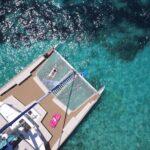
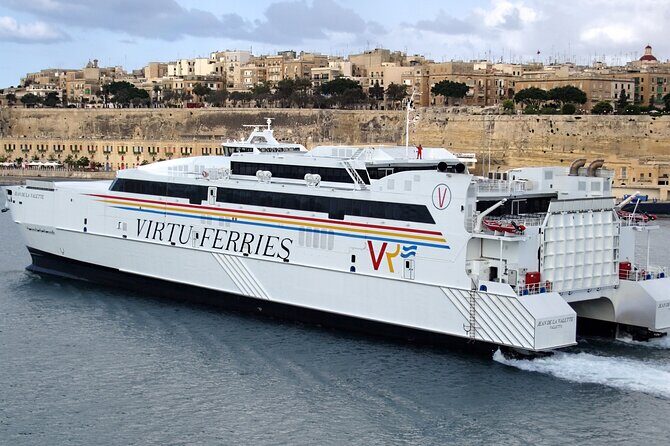
The tour begins at 6:30 am at the Sicily Catamaran Marsa in Malta. You’re looking at a total duration of about 14 hours (including travel time), so an early wake-up is part of the deal, not a surprise.
The big win here is comfort and speed. A high-speed passenger catamaran generally means you spend less time bouncing around and more time onshore. Add in the fact that you’ll transition to a climate-controlled bus, and you’ve got fewer “heat stress” moments than you’d have on a day built around slow transfers.
One practical tip: keep your passport handy. A current valid passport is required on the travel day, and the tour ends back at the meeting point, so you don’t want anything to derail your schedule.
The Ferry-Port Reality: Meeting Up and Getting Tickets
Your day includes meeting guides and switching to the coach after arrival. You’ll also use a mobile ticket, so have it accessible offline if possible (no signal anxiety on a busy pier).
There’s one logistics moment you should plan for. At least one prior traveler ran into confusion at the ferry port and only got sorted out after presenting their confirmation and then receiving ferry boarding/ticketing help. I’d treat this as a sign to arrive a little early and keep your booking confirmation easy to show.
Syracuse and Ortygia: Where a Whole City Acts Like a Museum

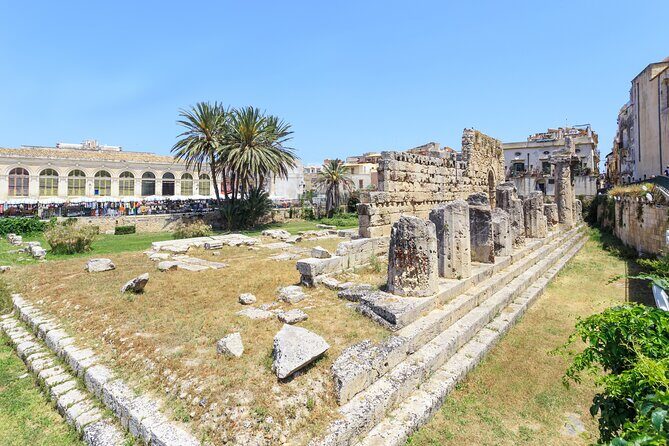
Syracuse is one of those places that doesn’t ask for permission to be impressive. You start with a stop built around seeing Syracuse as a former heavyweight—Greek settlers shaping the area starting in 733 BC, and the city’s later evolution into a major center in Western Europe.
The practical side: you’ll likely be split between guided context and your own roaming time. That freedom can be a plus if you like exploring at your own pace, but it can also be a navigation challenge if you’re not comfortable walking and orienting yourself quickly.
Then you move into Ortygia, which is the heart and soul of Syracuse. Ortygia is technically an island area now joined to the mainland by a short bridge, and it’s the part that feels most like “walking the old city” rather than just driving past it.
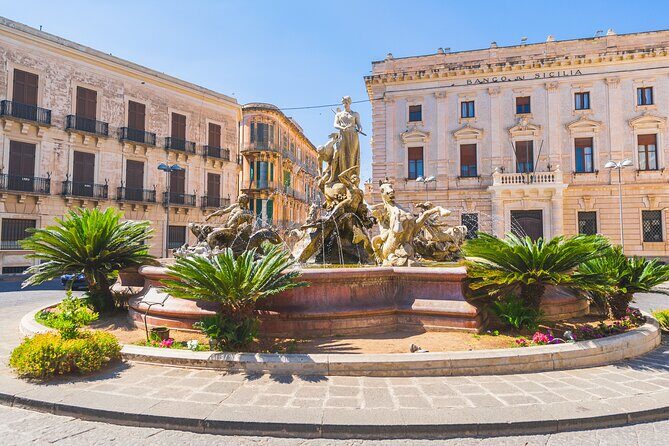
Piazza Duomo and the Duomo di Siracusa: A Building That Rewrites Itself
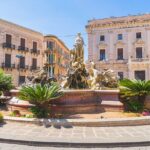
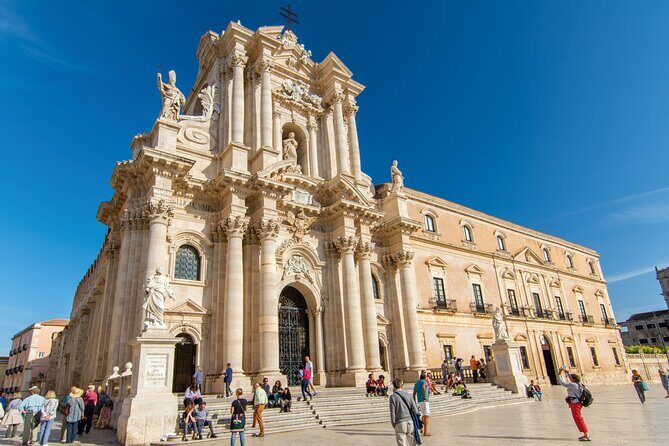
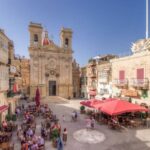
The Syracuse Cathedral area is centered on Piazza Duomo in Ortygia. This is one of the rare sites where the architecture isn’t just decoration—it’s a timeline you can read with your eyes.
Here’s the story the site tells in layers:
- The Greeks built it as the Temple of Athena.
- After the Byzantines conquered Syracuse, they converted the temple into a Christian church instead of demolishing it.
- The Normans modified the interior and added a more Christian façade.
- When a major earthquake hit in 1693, the Baroque façade you see today was erected.
It’s also described as one of the oldest sites of continued worship in the world. Even if you’re not a formal “architecture person,” I’d still make time to step back and look at the whole façade and the way the space is set up for worship and gathering.

Marzamemi: The Fishing Village Stop That Changes the Pace
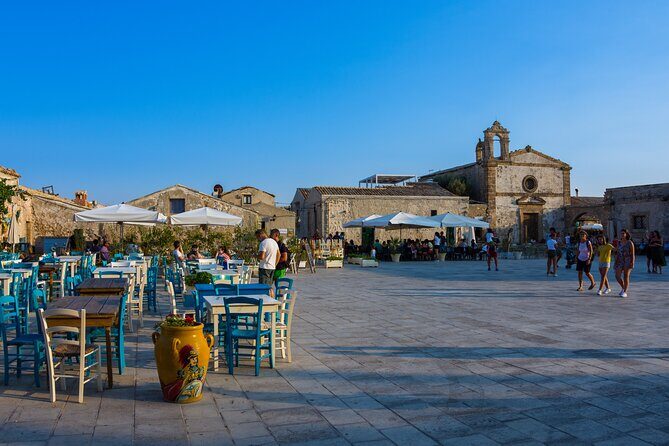
After the heavier “big-city ancient” vibe of Syracuse, Marzamemi slows the day down. This is a quaint fishing village about 45 minutes away from Pozzallo, built around colorful one-story fishermen’s houses and the Tonnara—a disused tuna processing plant.
A few details worth clocking while you’re there:
- The Tonnara was built by the Arabs in the X century.
- The village is overlooked by buildings like Palazzo Principe Villadorata and the Chiesa di San Francesco di Paola.
- The center is Piazza Regina Margherita, which is where people naturally gather.
You’ll see the “postcard basics,” but in a way that feels earned because the village layout supports it: blue doors, bright windows, potted red geraniums, and fishing boats set against the Mediterranean.
Is it for everyone? If you’re expecting another major museum-stop with structured sights and constant storytelling, you might find yourself wanting more. If you like relaxed wandering, local color, and simple sea views, this is a strong moment to breathe.
Pozzallo as the Loop-Point Back to Malta
Pozzallo shows up near the end of the day as the group reaches it on the way back to Malta. Think of it as the practical hinge: you’re not going there for a “signature landmark” in the way you do with Syracuse or the cathedral.
It can still be useful time because it signals you’re moving into return mode. If you tend to get bus-sick, you’ll want to time your hydration and plan a light snack before the long re-boarding portion.
Mt. Etna and Modica: How This Day Gets Its Sicily Sense
The tour description highlights Mt. Etna and the baroque city of Modica as key elements of the day. It also specifically notes free time to see Modica at your own pace, which matters because Modica is one of those places where the “best part” can be the small streets, views, and spontaneous stops rather than a single scheduled attraction.
Because the exact Etna/Modica timing isn’t spelled out in the stop-by-stop details here, treat this part as “do-your-best within the schedule.” If you care about Etna viewpoints, plan to arrive ready to act quickly—wear layers, and keep an eye on what’s feasible with the transport rhythm.
For Modica, your best move is to map just one or two must-do areas mentally and then give yourself flexibility around them. The included tasting of Sicilian wine and sweets helps connect the day’s sightseeing to local food culture, and Modica’s vibe can feel more real once you’ve had that taste.
Bus Time: The Trade-Off You Should Plan For
This is where the tour can feel like a win or a chore, depending on how you handle long travel. The ride is described as long because coaches are needed to reach relevant stops on the island.
If you don’t love bus time, this isn’t a gentle day. You should be ready with a small kit: water, a snack, something for sun protection, and anything that makes long sitting easier for you. If you do like learning on the move, the driver/guide narration is your friend—there’s commentary on history and Sicilian life that helps you connect the dots while you’re stuck in transit.
One more smart idea: don’t plan your most intense walking shoes for the first part of the day. Start comfortable, then upgrade your game for Ortygia and any cathedral-area time, when you’ll likely do more step-counting.
Included Moments That Matter (Not Just Checkboxes)
The included items are built around making the day “functional,” not just scenic:
- Round-trip boat tickets between Malta and Sicily
- Meet guides and a climate-controlled coach upon arrival
- Local guide and driver/guide
- Air-conditioned vehicle
- An included tasting of Sicilian wine and sweets
- Admission structure that covers key stops (for example, the Syracuse Cathedral/Ortygia Duomo ticket is included)
That tasting is more than a nice-to-have. It’s a chance to slow down for a minute in a day that otherwise runs on schedules. It’s also a low-effort way to sample Sicilian flavors without having to stop and research a place to eat.
What’s Not Included: The Part You’ll Feel in Your Wallet
Food and drinks aren’t included, and there’s no hotel pickup or drop-off. So even if the core transportation and guiding are well-covered, you still need to handle meals like a self-sufficient traveler.
I’d budget for:
- A breakfast you can buy near the early start, before your ferry time
- Snacks for the bus segments
- Drinks during the hottest stretches of the day
If you have dietary needs, plan more carefully. The tour only guarantees the included tasting, and the rest of your eating is on you.
Who This Trip Suits Best
This works well if you want a “high-impact day” without the hassle of ferry planning and day-trip logistics. I think it’s especially good for:
- People who enjoy ancient cities and architecture, particularly the Greek-to-Baroque story at Ortygia
- Travelers who like a mix of structured stops and free time (Modica gets room to roam)
- Anyone who values comfort from the air-conditioned coach and a smoother ride by catamaran
It may be less ideal if you:
- Want lots of stops packed tightly with minimal transit
- Prefer a very guided, fully scripted day with continuous narration
- Dislike fishing-village pacing and would rather prioritize only major cities and museums
Should You Book This Syracuse and Marzamemi Sicily Day Trip?
I’d book it if you’re craving a one-day Sicily fix with real variety: ancient Syracuse, cathedral architecture that shows centuries of change, a classic coastal village, and time tied to Mt. Etna and Modica. The included ferry and the guided structure make it convenient, and the tasting gives you a local-food anchor.
I’d think twice if you’re sensitive to long travel days. This one has a strong “move, then stop, then move again” rhythm, and the bus time is part of the cost. If you’re the kind of traveler who needs lots of guided instruction at every stop, you might end up wanting more direction than the schedule provides.
If you do book, go in prepared: bring snacks, keep your ticket info ready on your phone, and wear shoes that can handle uneven old streets once you’re in Ortygia.
FAQ
How long is the Syracuse and Marzamemi Sicily day trip from Malta?
The total duration is about 14 hours, including travel time.
Where does the tour start and end?
It starts at Sicily Catamaran Marsa in Malta at 6:30 am and ends back at the same meeting point.
Is round-trip ferry travel included?
Yes. Round-trip boat tickets between Malta and Sicily are included.
What’s included in the tour price?
Included are a local guide, a driver/guide, an air-conditioned vehicle, and an included tasting of Sicilian wine and sweets.
What is not included?
Food and drinks are not included, and there is no hotel pickup and drop-off.
Do I need a passport?
Yes. A current valid passport is required on the day of travel.
How big is the group?
The tour has a maximum of 15 travelers.
Does weather affect the tour?
Yes. The experience requires good weather. If it’s canceled due to poor weather, you’ll be offered a different date or a full refund.