REVIEW · MALTA
Gozo 4×4 Chauffeured Buggy Tour with Lunch and Transport
Book on Viator →Operated by Robert Arrigo & Sons · Bookable on Viator
Gozo by buggy beats staring at maps. This chauffeured 4×4 day trip lets you cross the island at real-road speed while your driver handles the directions and tells you what you’re seeing. You’ll start at Mġarr Harbour, hop between coast and countryside, and end back on a boat with Comino scenery if the sea behaves.
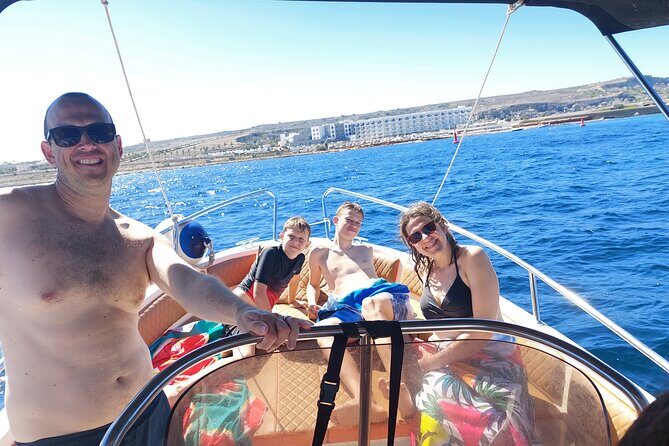
I love two things in particular: the included lunch (with local wine and mineral water) and the fact you’re not stuck in long bus lines. With a small buggy setup (up to 5 per buggy), you actually get time to stop, look, and take photos instead of just rolling past.
One thing to consider: a few of the most tempting extras are optional and cost extra, especially the Ġgantija temples and the Inland Sea boat ride at Dwejra (and weather can affect boat time). If you hate surprise add-ons, plan for them up front.
In This Review
- Key highlights you’ll feel fast
- What a chauffeured Gozo 4×4 buggy day really feels like
- Why the included lunch matters more than you’d expect
- Morning start: Mġarr Harbour and the “okay, now we’re in Gozo” moment
- Għajnsielem’s Parish Church of Our Lady of Loreto: history you can actually picture
- Il-Belveder in Qala: Comino, Cominotto, and a view with a story
- Daħlet Qorrot: fishermen’s caves and a quieter kind of Gozo coastline
- Calypso Cave and Ramla Bay: red sands and the Odyssey connection
- Ta’ Kola Windmill: the Knights-era bread machine
- Ġgantija Archaeological Park: UNESCO temples that feel oddly human
- Xewkija rotunda and the Citadel: big Gozo monuments in two different moods
- Rotunda of Xewkija (another stop with built-in meaning)
- The Citadel in Victoria: fortress views and layers underneath
- Lunch and downtime rhythm, plus a summer swim stop
- Xlendi and Dwejra: caves, cliffs, and the Inland Sea choice
- Inland Sea at Dwejra: a natural tunnel with an optional boat ride
- Ta’ Ġordan Lighthouse and Dwejra’s wider geology
- Ta’ Pinu Miracle Church: the stories people leave behind
- Xwejni Salt Pans and Wied il-Mielaħ Window: north-coast scenery that feels like a photo lesson
- Marsalforn Bay: the food and beach face of the north
- The return to Malta: boat views of Comino, and the weather reality
- Price and value: what $98.40 covers (and what you may pay extra)
- Who this tour fits best
- A quick note on guides: you can get a more personal day
- Should you book this Gozo 4×4 buggy tour?
- FAQ
- How long is the Gozo 4×4 chauffeured buggy tour?
- What time will I start, and when might pickup happen?
- Is hotel pickup and drop-off included?
- Is lunch included, and what does it include?
- Do I need to pay extra for the Ġgantija temples or the Inland Sea boat trip?
- Is a swim stop included?
- What if the boat can’t run or I need to cancel?
Key highlights you’ll feel fast

- Driver-led navigation so you can focus on views, not roads
- Lunch with local wine plus mineral water, included in the price
- UNESCO time travel at Ġgantija without the hassle of planning it yourself
- Comino and Blue Lagoon return views when the weather allows the boat transfer
- North-coast photostops like Xwejni salt pans and the Wied il-Mielaħ window
What a chauffeured Gozo 4×4 buggy day really feels like
A Gozo buggy tour is the kind of plan that works because it removes friction. You get picked up in the morning, then you’re assigned to an experienced driver who keeps the day moving and explains the places in plain language. The point isn’t to race through Gozo. The point is to see enough of it that you understand how the island fits together: cliffs and coves, inland farms, big historic sites, and little corners that only make sense after you’ve been there.
The best part is mental: you don’t have to translate road signs, calculate parking, or deal with “one more stop” decision-making. Your job is simple. You show up, you ride, and you pick which photo angles you want most.
Other Gozo Island tours we've reviewed in Malta

Why the included lunch matters more than you’d expect
This tour builds in lunch with local wine and mineral water. In Malta and Gozo, food stops can turn into wasted time if you’re coordinating them yourself. Here, lunch is part of the schedule, which means you can keep momentum through the day. You also avoid the common travel problem of arriving hungry at a viewpoint and then spending your limited time shopping for a snack.
Morning start: Mġarr Harbour and the “okay, now we’re in Gozo” moment
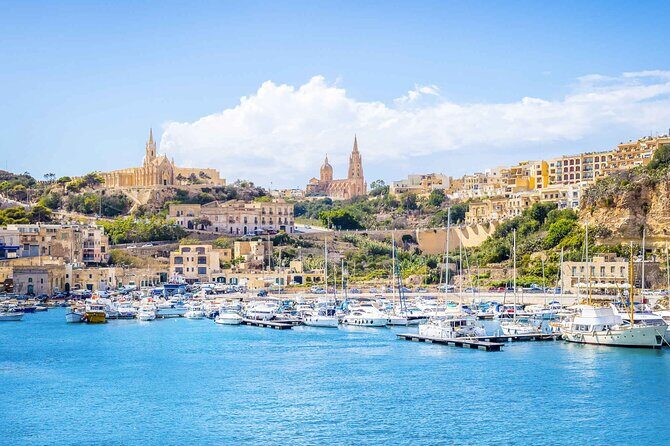
You begin at Mġarr Harbour, the main gateway to the island. Boarding happens there, and from the start you’re in a small-group setup with a driver who’s also acting as your storyteller. Even before your first big viewpoint, you’re already getting the rhythm of Gozo: short stretches of road, sudden open views, then another turn into a different kind of countryside.
If you like context, you’ll appreciate the way the tour keeps explaining what you’re seeing as you go. The tour also works with multilingual help at each stop, so if you want extra detail, you can ask your driver or tour leader in your language.
Għajnsielem’s Parish Church of Our Lady of Loreto: history you can actually picture

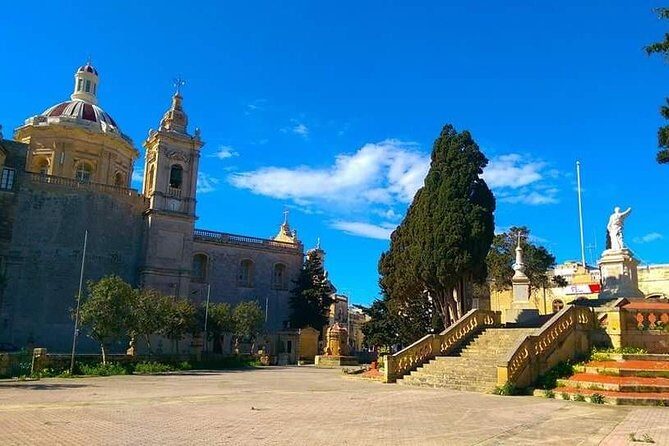
One of the early stops is the Parish Church of Our Lady of Loreto in Għajnsielem. It’s a Roman Catholic neo-Gothic parish church with a foundation stone laid on September 14, 1924. What makes this stop interesting isn’t just the architecture. It’s the timeline: the church wasn’t finished until the mid-1970s due to disruptions, especially around World War II.
This is a good stop if you’re the type who likes to connect buildings to real events. It also breaks up the ride with a quick, calm moment where you can walk, look up, and reset.
Il-Belveder in Qala: Comino, Cominotto, and a view with a story
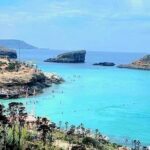
Next comes a viewpoint-style stop at Il-Belveder (Qala Belvedere). From here, you can enjoy sweeping scenery toward Comino, Cominotto, and the Blue Lagoon. There’s also a small church courtyard: Il-Madonna Tal-Blat (Saint Mary of the Rocks).
This church has a legend behind it: it was supposedly built so people on the neighboring island of Comino could follow Holy Mass when weather made crossing too risky for a priest. In other words, this isn’t just a photo moment. It’s a reminder of how the sea controlled daily life.
If you’re thinking about photography, this is a great time to practice. The coastlines here give you depth, not just a flat horizon. Move a few steps and you’ll often find a new angle immediately.
Other quad, buggy and UTV tours we've reviewed in Malta




Daħlet Qorrot: fishermen’s caves and a quieter kind of Gozo coastline
After the big-view stop, the tour heads toward Daħlet Qorrot, a small inlet near Nadur. It’s known for a tiny pebbly beach and rocks that frame the cove. What you’re likely to notice is that this isn’t “showy” tourism coastline. It’s a working area where fishermen use the caves at the base of the cliffs for boat storage and gear.
If you like seeing how locals use the coastline, this stop delivers. It’s also a useful change of pace after viewpoints, because you’re looking at everyday details: nets, boats, and the structure of the bay.
Calypso Cave and Ramla Bay: red sands and the Odyssey connection
On the western side of Ramla Bay near Xagħra sits Calypso’s Cave, overlooking Gozo’s red sand beach. The cave is believed to be connected to Homer’s Odyssey. The story goes that Gozo was Homer’s island of Ogygia, and Calypso kept Odysseus there for seven years.
Then you’re at Ramla Bay, locally called Ir-Ramla l-Ħamra (red sands). Ramla is famous in the Maltese archipelago for a reason: those reddish sands look different from the usual golden beaches you see elsewhere in the Mediterranean.
Practical note: the quick stop format means you’ll want to decide early what you care about most—cave view, beach photos, or a short walk.
Ta’ Kola Windmill: the Knights-era bread machine
Gozo’s Ta’ Kola Windmill is a standout stop if you like everyday historical tech. It’s one of the few surviving windmills on the islands from the Knights’ period, dating to roughly 200 years old. It’s tied to breadmaking, one of the most stable essentials in a pre-modern diet.
Even if you don’t go inside (and the tour timing can be tight), the windmill helps you understand the island’s old economy. It’s a reminder that Gozo’s heritage isn’t only temples and churches. It’s also food systems and daily survival.
Ġgantija Archaeological Park: UNESCO temples that feel oddly human

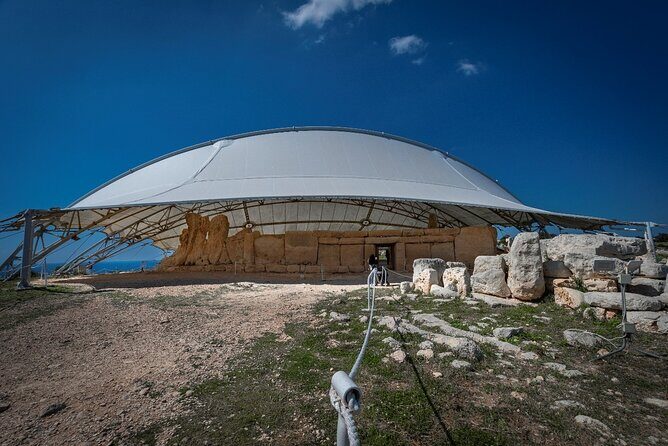
When you reach Ġgantija, you’re entering UNESCO World Heritage territory. These megalithic temples date to around 3600–2500 BC. The scale hits you quickly: huge limestone blocks, some over five meters long, weighing an enormous amount.
The timing matters too. Ġgantija is thought to be among the oldest major religious sites, second only to Göbekli Tepe in Turkey in many common comparisons, and it predates places like Stonehenge and the pyramids by roughly a thousand years.
Here’s the key detail for your budget: the park’s entry fee is not included. It’s listed as optional with a cost around €10 per person (and that price can change). If you want the full value of the day, plan to pay it and give yourself time to walk the site properly.
Xewkija rotunda and the Citadel: big Gozo monuments in two different moods
The tour then moves through some of Gozo’s most recognizable “I get it now” landmarks.
Rotunda of Xewkija (another stop with built-in meaning)
You’ll visit the Rotunda of Xewkija, one of Gozo’s most visible places of worship. It was built between 1952 and 1979 and has the third highest unsupported dome in the world. That dome fact alone is memorable, but the real reason it works is that you can see how modern engineering and long-standing faith shaped the island.
The Citadel in Victoria: fortress views and layers underneath
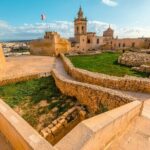
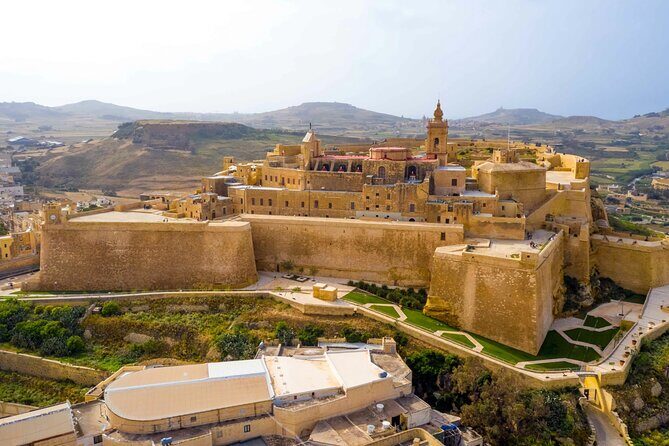
Next is The Citadel in Victoria, also called Iċ-Ċittadella. This medieval fortress dominates the skyline and has been the focus of settlement far longer than the medieval walls suggest. The site is linked to Bronze Age habitation and is thought to have served as the acropolis of a Punic-Roman city.
During the medieval period, the acropolis became a castle that offered refuge. By the 15th century, development spread outside the walls, forming the historic core of Victoria.
This is a nice stop for both history and views. Even if you only have about 35 minutes, it’s enough time to get your bearings and enjoy the skyline.
Lunch and downtime rhythm, plus a summer swim stop
Lunch is part of the deal: included with local wine and mineral water. In practice, that means you’re less likely to hit the afternoon tired and cranky. After lunch, the day shifts toward more coastal scenery.
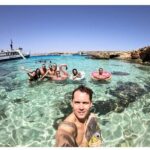
In the warmer months (usually April to October, described as high season), there’s an included swim stop at a bay in Gozo. Bring your swimwear, since the itinerary includes time for a quick dip. In shoulder season or cooler times, that swim element may not be included, so your plan should adapt.
Xlendi and Dwejra: caves, cliffs, and the Inland Sea choice
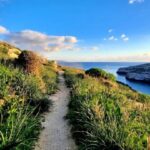
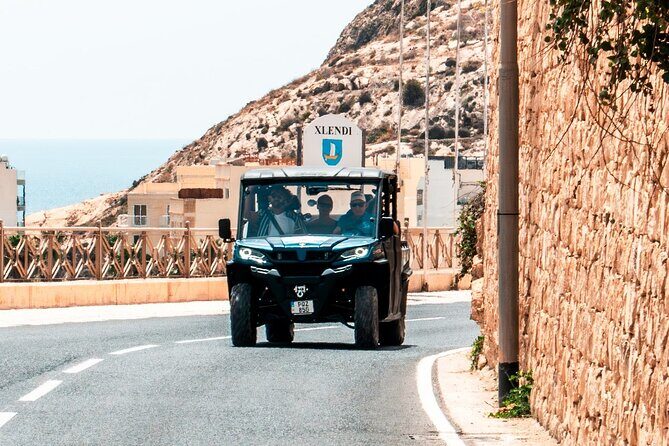
After Victoria, the tour heads down toward the coast with Xlendi, a charming bay with cliffs and a tight little shoreline scene. It’s a good spot to feel Gozo’s coastal character without needing to hike all day.
Inland Sea at Dwejra: a natural tunnel with an optional boat ride
At Dwejra Bay, you’ll meet the famous Inland Sea area. The big feature is a natural tunnel about 65 meters long that connects a sheltered bay to open sea. If the weather allows, there’s a chance to take a short boat trip through the tunnel area.
That boat ride is optional and not included, with a cost around €6 per person (price can change). If you love geological quirks, this is worth considering. If you prefer staying dry, you’ll still get the main sights from the shore.
Ta’ Ġordan Lighthouse and Dwejra’s wider geology
The tour also mentions Ta’ Ġordan Lighthouse on a hill above Għasri, plus additional time in the Dwejra area for the geological and ecological setting. You get a sense of why Dwejra is popular: it’s not just one view. It’s a whole system of coastline, cliffs, and history.
Ta’ Pinu Miracle Church: the stories people leave behind
Next is the Ta’ Pinu National Shrine, often called the Miracle Church (Il-Knisja tal-Mirakli) in Għarb. This is one of Gozo’s iconic landmarks, and the focus here is not only the building.
Inside the shrine, you’ll see walls covered with letters, crutches, damaged helmets, and other offerings left by people who believed they were blessed with a miracle. Even if you’re not religious, it’s a powerful human detail. It tells you what this place means to people who came by ship, by boat, by hope.
Xwejni Salt Pans and Wied il-Mielaħ Window: north-coast scenery that feels like a photo lesson
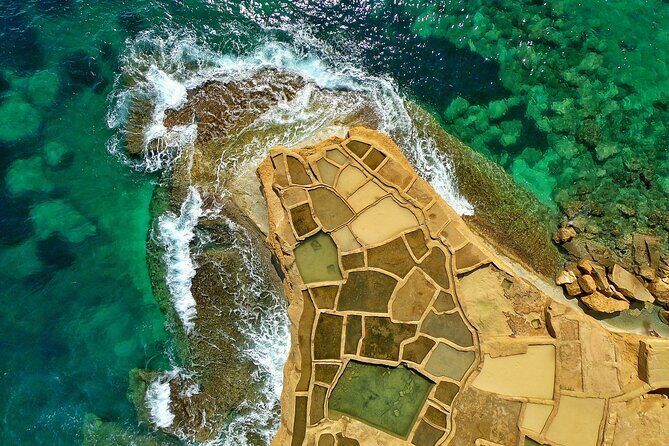
As you head north, the tour gives you time at Xwejni Salt Pans. These salt pans are a key part of Gozo’s tradition and trade. They form a striking checkerboard pattern with shimmering reflective pools. They’re spread along several kilometers of coastline and divided between salt farmers.
If you want one practical travel lesson from this stop: look at the way the sea, the rocks, and the seasons work together. Salt harvesting depends on wind and weather, so the landscape here is shaped by practical rhythms, not just scenery.
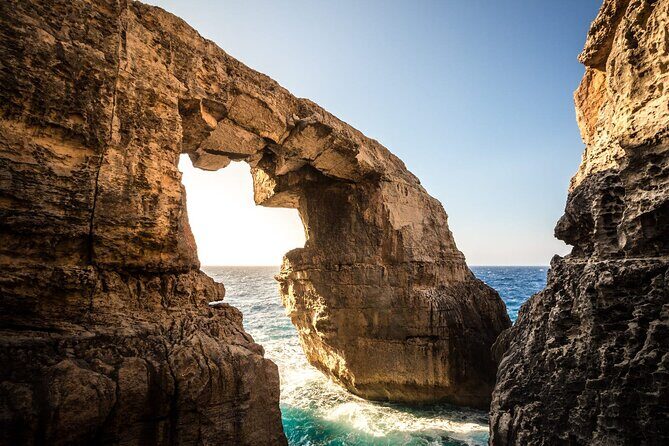
Then comes Wied il-Mielaħ Window, a limestone natural arch reachable via a long stairway with a guardrail. You don’t need to be a geology nerd to appreciate this one. It’s simple and visual: the sea has carved an opening that frames the coast like an oversized window.
Marsalforn Bay: the food and beach face of the north
You also spend time around Marsalforn Bay, a small northern bay that’s well known for seaside restaurants and views. This stop is useful if you want a “wrap-around” feeling before the ride back toward the harbor. It also gives you an easy place to process what you’ve seen all day.
The return to Malta: boat views of Comino, and the weather reality
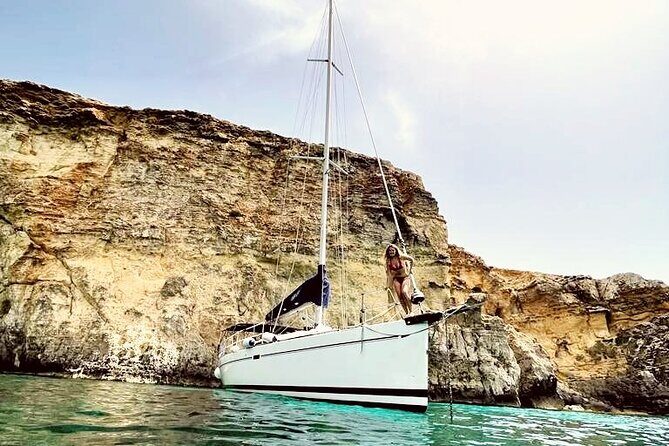
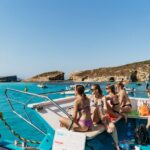
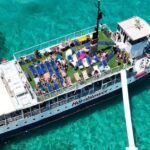
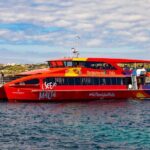
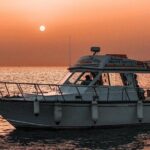
After your full Gozo loop, you return toward Malta via boat if conditions allow. The return ride is described as passing Comino’s Blue Lagoon, Crystal Lagoon, and Sea Caves, which is a great final payoff because you’re seeing the island chain from the water instead of only from viewpoints.
Important: weather can change everything. If the boat transfer isn’t feasible, the return goes by the communal Gozo Channel ferry instead. The key is that your day still ends with a sea crossing that matches the theme of Gozo.
In some cases, if the tour is cancelled due to poor sea conditions, you’ll be offered a reschedule date, or a full refund if you can’t change plans.
Price and value: what $98.40 covers (and what you may pay extra)
At $98.40 per person, the value comes from how much is already built in. You get:
- pickup and drop-off from selected hotels or meeting points
- experienced drivers (tour leaders)
- multilingual storytelling at each stop
- lunch with local wine and mineral water
- a swim stop in high season (seasonal)
- return transport by boat or ferry depending on conditions
- roundtrip Gozo ferry tickets when required
What’s extra is mostly two-choice pricing:
- Ġgantija temples admission: around €10 per person (optional)
- Inland Sea boat trip at Dwejra: around €6 per person (optional)
- extra drinks during lunch (other than wine and water)
- gratuities
Add those up and you can decide how “active” you want to be. If you take both optional experiences, you’re still not getting hit with a huge surprise bill. The main thing is to go in knowing those optional fees exist so you can choose confidently.
Who this tour fits best
This works best if you want a full-day overview of Gozo without self-driving. The 4×4 buggy format helps you cover a lot of ground and hit both the big-historic sites and coast viewpoints.
It’s also a good option for families and groups who need a driver-led day, especially since foldable strollers are allowed.
One caution: it’s not recommended for travelers with mobility impairments. If that applies to you, it’s worth looking for a different style of tour.
A quick note on guides: you can get a more personal day
The experience quality often comes down to your driver’s style, and here the names show up in the good way. You might get drivers like Joe, who’s described as patient and willing to adapt the day to what you want (including skipping a lagoon swim when you prefer other spots). Other guide names that have been associated with strong days include Charlie, Armor (St. Armor), and operators like Morad and Carlos, who bring humor and local knowledge.
You’ll also find that the operator keeps control of timing and logistics, which matters on a day where weather and sea conditions can affect the boat portions.
Should you book this Gozo 4×4 buggy tour?
I’d say book it if you want a driver-led day that mixes UNESCO-level stops, iconic coastviews, and practical pacing. It’s the kind of tour that helps you understand Gozo fast, without turning your trip into a checklist of car rentals and timed tickets.
Skip or compare if you hate paying optional site fees, or if mobility is a concern for you. Also, if you’re obsessed with one specific experience like the Ġgantija temples or the Inland Sea boat ride, check whether you can handle those being optional and weather-dependent.
If you want a balanced Gozo day that feels well run, this is a solid pick.
FAQ
How long is the Gozo 4×4 chauffeured buggy tour?
It runs about 7 to 8 hours.
What time will I start, and when might pickup happen?
The activity start time is listed as 10:00 am, but that is approximate. Pickup time can be anywhere from 8:00 am to 9:15 am depending on where you are staying, and you need to confirm your exact pickup location and time with the operator a few days before.
Is hotel pickup and drop-off included?
Yes. Pickup and drop-off transfers are included from selected hotels or meeting points.
Is lunch included, and what does it include?
Lunch is included and comes with local wine and mineral water.
Do I need to pay extra for the Ġgantija temples or the Inland Sea boat trip?
Yes. Admission to the Temples of Ġgantija is not included (around €10 per person). The boat trip at the Inland Sea in Dwejra Bay is also not included (around €6 per person) and is paid on location if weather allows.
Is a swim stop included?
A swim stop at a bay in Gozo is included during summer/shoulder season (usually April to October). Bring swimwear.
What if the boat can’t run or I need to cancel?
The return journey is by boat when possible, and if conditions don’t allow it, it switches to the communal Gozo Channel ferry. If you cancel, it’s free cancellation up to 24 hours before the start time for a full refund. If the tour is cancelled due to poor sea conditions, you’ll be offered a reschedule date, and if you cannot reschedule you receive a full refund.