REVIEW · MALTA
Discover Valletta Half-Day Walking Tour
Book on Viator →Operated by V. Tabone Travel · Bookable on Viator
Valletta in half a day can work. This walking tour is a cost-smart way to hit the big sights with a licensed guide, and it ends with your day still wide open. I especially like the focus on landmarks you can’t miss—City Gate, St. John’s Co-Cathedral, the Grand Harbour viewpoints—and the way the guide helps with logistics so you don’t lose time. One thing to watch: most of the major interiors and museums are not included, so your total can rise fast if you buy every ticket.
The route moves steadily from Floriana into Valletta and keeps you on foot for about 3 hours 15 minutes, then you’re done at 12:45. Along the way, you get a blend of modern architecture and hard-earned history, from the Triton Fountain’s 1959 Modernist roots to the scars of wartime bombing at the opera site. If you want a guided walk plus optional ticket time at the top attractions, this format is a good fit.
In This Review
- Key highlights worth your attention
- Price and what you really get for $22.11
- Getting oriented: meeting point, timing, and how the day flows
- City Gate to Republic Street: starting with the Triton Fountain and Porta Reale Curtain
- Modern Malta at a walking pace: New Parliament and the Opera House ruins
- Baroque power and today’s institutions: Auberge de Castille, MUŻA, and Palazzo Parisio
- Upper Barrakka Gardens: the view break that’s worth it
- St. John’s Co-Cathedral: choose your depth during the 45-minute break
- Grandmasters’ Palace and St. George Square: the civic center of Valletta
- Fort St Elmo and the Malta Experience: a final chapter with options
- Who this tour fits best (and who might want to tweak it)
- Should you book this Valletta half-day walk?
- FAQ
- What is the duration of the Valletta half-day walking tour?
- Where does the tour start and end?
- Are tickets for major attractions included in the price?
- What attractions are free to view during the tour?
- Is there time to visit St. John’s Co-Cathedral?
- Does the tour include the Malta Experience show?
- What is the cancellation policy?
Key highlights worth your attention
- City Gate + Republic Street orientation so you understand where everything sits in Valletta
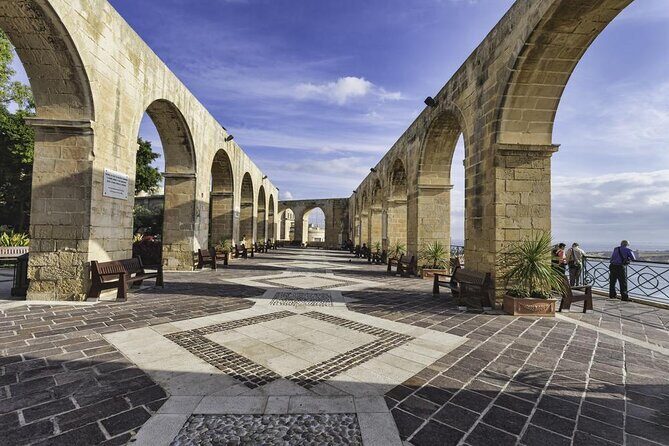
- Upper Barrakka Gardens for a short, high-value Grand Harbour view break
- St. John’s Co-Cathedral free time to choose how deep you go with tickets and audio guide
- Grandmasters’ Palace area with a quick look at the political heart of the city
- Fort St Elmo + optional Malta Experience show to close the loop on siege-era history
Price and what you really get for $22.11
At $22.11 per person, the main value here is that you’re paying for a professional licensed guide and a structured walk—about 3 hours 15 minutes—through the central spine of Valletta. This is the kind of tour that helps you get bearings fast, without front-loading your day with multiple guided tickets that cost extra.
The other value is that the tour is designed as a “guided framework,” not a full ticket bundle. Several stops are free to view from the outside—like the Triton Fountain, Valletta City Gate, Upper Barrakka Gardens, and St. George Square—while the big indoor sites (and the museum components) are up to you. That makes it easy to control your spending: you can skim, or you can add tickets based on what you care about most.
Here’s the one drawback to keep in mind when budgeting: the tour includes a 45-minute free time at St. John’s Co-Cathedral and museum (entrance not included), plus the option to visit the Grandmaster’s Palace and National War Museum at Fort St Elmo (both not included). If you buy every add-on, you’ll pay more than the headline price. If you’re selective, the $22.11 works out very well.
Other Valletta tours we've reviewed in Malta


Getting oriented: meeting point, timing, and how the day flows
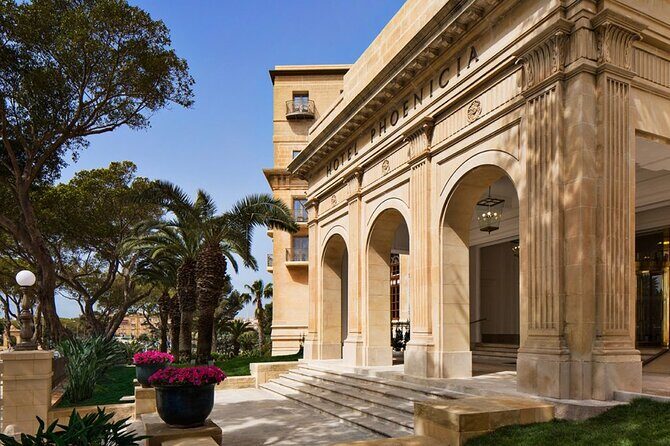
The tour starts at 9:15am at The Phoenicia Malta, The Mall, Floriana. You walk into Valletta from there, and the guide handles the logistics. The ending point is the Malta Experience at St Elmo Bastions, at 12:45pm, which is a practical time to wrap up before the rest of the city gets too tiring.
You should plan for a moderate walking day. The pace is active but not described as limited—most travelers can participate—and the group is capped at 50 people, so it shouldn’t feel like a mass stampede.
Two small practical notes that matter: it’s a mobile ticket tour, so have your phone ready, and there’s no hotel pick-up or drop-off. If you’re staying outside the immediate area, you’ll want to plan your route to the Phoenicia in advance so you can arrive without stress.
City Gate to Republic Street: starting with the Triton Fountain and Porta Reale Curtain
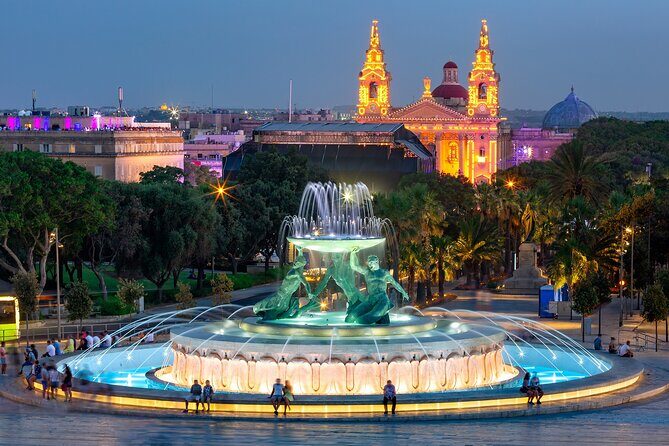
The walk begins with a landmark most visitors miss if they’re only hunting for grand churches. Right outside Valletta’s City Gate, you’ll see the Triton Fountain, a Modernist feature inaugurated in 1959 and restored in 2018. It’s made of three bronze Tritons holding up a basin, and it’s a good reminder that Valletta isn’t frozen in time—later design chapters are part of the story.
Then you move into Valletta City Gate, located in the Porta Reale Curtain. This curtain wall links St. James’ and St. John’s Bastions, and it includes a bridge spanning a deep ditch. The gate you see today is the fifth one on the site, and the present version was completed in 2014 to designs by Renzo Piano.
This is a smart starting point because City Gate marks the start of Republic Street, Valletta’s main street stretching to Fort Saint Elmo. Even if you don’t buy anything or enter any museums that first hour, you’ll understand the geography. That pays off later when you choose where to go next on your own.
Modern Malta at a walking pace: New Parliament and the Opera House ruins
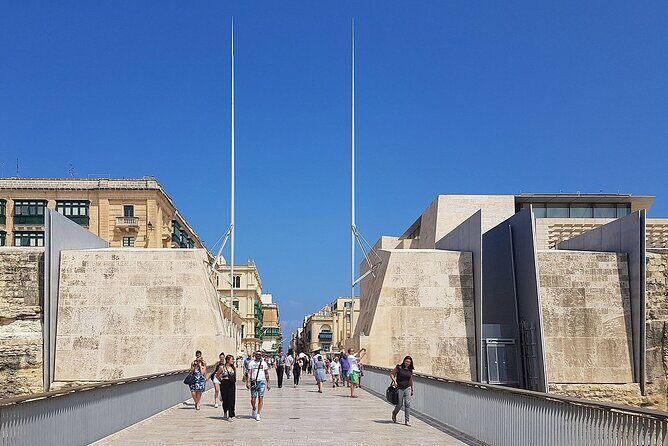
After the classic fortress edge of City Gate, the tour swings into the “new” Valletta look—very different, and useful for first-time orientation.
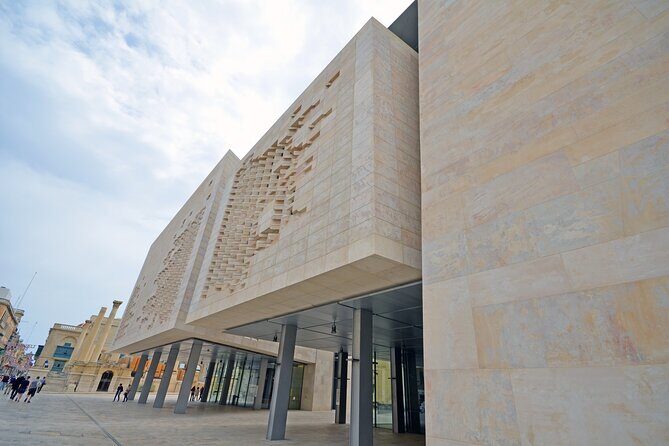
Next stop is The New Parliament, constructed between 2011 and 2015, also to Renzo Piano designs as part of the City Gate Project. The building is made of a steel frame clad in Gozitan limestone, and the design is intended to represent honeycombs—fitting since Malta’s name is tied to Melite, meaning honey.
Then comes the Royal Opera House Site, where the story is about destruction and return. The original opera house was completed in 1866, then took a direct aerial hit in 1942 during World War II. The ruins were later redesigned by Renzo Piano, and in 2013 the venue started functioning again as a performance space.
What I like about this segment: it keeps you from thinking Valletta is only about medieval walls and baroque stone. You see how modern projects, wartime loss, and rebuilding all sit close together in the city center.
Baroque power and today’s institutions: Auberge de Castille, MUŻA, and Palazzo Parisio
Now you hit the Baroque and institutional heart of the walk—places where the architecture signals authority.
At the high point of Valletta is Auberge de Castille (Castile Palace). Built in the 1740s under Manuel Pinto da Fonseca, it’s Baroque in style and it replaced an earlier 1574 building meant to house knights of the Order of Saint John from the langue of Castile, León, and Portugal. Today, this auberge houses the Office of the Prime Minister of Malta.
A short step later is Auberge d’Italia, built in the late 16th century for knights from the langue of Italy. In 2018, it became the new National Art Museum (MUŻA). If art museums are your thing, this stop is a reminder that museum time is an option even when the walk is short.
Then you reach Palazzo Parisio. Built in the 1740s by Domenico Sceberras, it later passed through the Muscati and Parisio Muscati families. It was Napoleon’s residence for six days in June 1798 during the French occupation. After that, it became the General Post Office from 1886 to 1973, then it served the Ministry for Agriculture, and it now houses the Ministry for Foreign Affairs.
This is a lot of “who used this building when” information in a short walk, but it works because you can read the city as a timeline. The streets aren’t just scenery; they’re clues.
Other walking tours we've reviewed in Malta

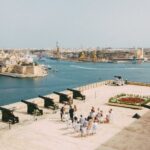
Upper Barrakka Gardens: the view break that’s worth it
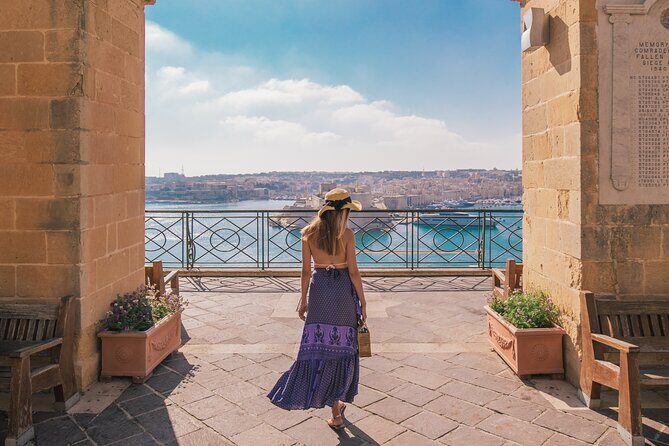
The tour gives you a free pause at Upper Barrakka Gardens for about 15 minutes. This is one of those blocks of time that feels small on paper, but big in real life—because it’s where Valletta becomes “harbour city,” not just “stone city.”
The gardens sit on the upper tier of St. Peter and Paul Bastion, built in the 1560s. They were originally for recreation for knights of the Italian langue of the Order of Saint John. Now, the payoff is the view: you can look over the Grand Harbour, the Three Cities, the shipyard, and the lower parts of the capital.
If you’re visiting in heat, this stop is also a pressure valve. You get a rest without abandoning the day’s momentum, and you’re still close to where the tour continues.
St. John’s Co-Cathedral: choose your depth during the 45-minute break
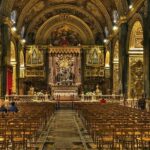
One of the strongest moments on the tour is the 45 minutes of free time at St. John’s Co-Cathedral and Museum (entrance not included). The tour team sets you up with time to decide what matters most to you—tickets are optional, but the chance to go inside is right there.
If you buy tickets, you’ll have access to the Caravaggio masterpieces in the Oratory, the Flemish tapestries, and the church museum. The co-cathedral also has one of the most famous features on the list: a marble inlaid floor. Entrance includes a multilingual audio guide, which helps if you want the story without relying on your phone.
If you decide not to enter, you still have options. Republic Street is right in the mix for shopping, and Republic Square (and nearby piazzas) gives you space to sit, snack, or just watch the city move.
This is also where guide quality can change your experience. In one example, a guide named Josephine was praised for making the Co-Cathedral stop feel well placed, and another guide named Maria was noted for sympathy and strong capacity. Even without name-dropping, the takeaway is clear: a good guide helps you prioritize the right places for your interests.
Grandmasters’ Palace and St. George Square: the civic center of Valletta
Next you pause at St. George Square—also known as Palace Square. It’s described as Valletta’s largest and most prominent square, located right in front of the Grandmasters’ Palace. The square’s look has changed since the 17th century, but it remains a key stage for important occasions and celebrations.
Then you get the exterior focus on Grandmaster’s Palace (The Palace), built between the 16th and 18th centuries as the palace of the Grand Master of the Order of St. John, who ruled Malta. This building also acted as the seat of Parliament of Malta between 1921 and 2015. Today it houses the Office of the President of Malta, plus the Palace State Rooms and the Palace Armoury, which are open to the public as a museum.
Even if you don’t enter, this stop helps you understand why Valletta’s layout feels “centered.” The tour doesn’t just show stones—it ties them to power and governance. If your budget is tight, you can treat this as a viewing stop and decide later whether the museum tickets are worth it.
Fort St Elmo and the Malta Experience: a final chapter with options
As the tour nears its end, you head to the National War Museum at Fort St Elmo. Fort Saint Elmo is a star fort on the seaward shore of the Sciberras Peninsula, dividing Marsamxett Harbour from Grand Harbour, and controlling the entrances to both harbours along with Fort Tigné and Fort Ricasoli. It’s tied to the Great Siege of Malta in 1565. Since 1975, part of the fort has housed the National War Museum.
Then the tour ends at 12:45pm at the Malta Experience entrance. Here, you can choose what you do next. The Malta Experience is a 45-minute multilingual audio-visual show that starts at 13:00 (entrance not included). It’s built to bring Malta’s history across centuries back to life. The setup also offers the chance to enjoy a drink and something to eat while overlooking the Grand Harbour (also not included).
This ending is practical because it gives you two paths:
- If you want a guided storyline finish, you can take the Malta Experience show.
- If you’d rather wander, you can head off on your own after 12:45.
Who this tour fits best (and who might want to tweak it)
This tour is best for you if you’re:
- On a first trip to Valletta and want an efficient route that covers the core architecture fast
- Interested in both older buildings and modern interventions (Renzo Piano’s influence shows up more than once)
- The type who likes guided orientation, then chooses your own ticket time
It’s also a good match if you don’t want to plan a day from scratch. The guide plots the logistics, and the itinerary mixes quick exterior stops with two bigger choices: St. John’s Co-Cathedral and an optional Malta Experience show.
You might want to adjust expectations if your goal is deep museum time. Several major sites are only quick stops or optional ticket visits. The tour gives you the “what to see” list and lets you decide the “how much to pay” part.
Should you book this Valletta half-day walk?
Yes, if you want a guided backbone for Valletta and you like being able to choose your ticket level. At $22.11, the guide + route structure is strong value, especially since multiple key sights are free to view from outside and the tour ends early enough for you to keep exploring.
I’d book it if:
- You want City Gate → Republic Street → views → co-cathedral area → fort/siege-era framing in one smooth morning
- You’re comfortable budgeting extra for whichever interiors you care about
I’d think twice if:
- You’re hoping that the price includes most museums and major entrances (it doesn’t)
- You need lots of time inside multiple ticketed venues, because the plan deliberately keeps you moving and leaves choices to you
If you like your sightseeing organized but still flexible, this is a solid way to start your Valletta day.
FAQ
What is the duration of the Valletta half-day walking tour?
It runs for about 3 hours 15 minutes, starting at 9:15am and ending around 12:45pm.
Where does the tour start and end?
It starts at The Phoenicia Malta, The Mall (Floriana) and ends at the Malta Experience at St Elmo Bastions.
Are tickets for major attractions included in the price?
No. The tour includes the walking tour and guide. Admission to places like St. John’s Co-Cathedral, Grandmaster’s Palace, Fort St Elmo (National War Museum), and Malta Experience is not included.
What attractions are free to view during the tour?
The Triton Fountain, Valletta City Gate, Upper Barrakka Gardens, and St. George Square are listed as free admission for the stops where you view them.
Is there time to visit St. John’s Co-Cathedral?
Yes. You get about 45 minutes of free time at St. John’s Co-Cathedral and Museum. Entrance is not included, but you can purchase tickets during that time.
Does the tour include the Malta Experience show?
The tour ends at 12:45pm at the Malta Experience entrance. You can buy tickets to the 13:00 45-minute audio-visual show, but entrance is not included.
What is the cancellation policy?
You can cancel for a full refund if you cancel at least 24 hours before the experience’s start time (cut-off uses local time). If you cancel less than 24 hours before, the amount paid is not refunded.