Malta can be hot, slow, and traffic-jammed, so a pass that keeps you moving matters. The Malta Multi Pass mixes sea views, UNESCO temples, and major museums into a flexible bundle so you can build a day (or several) without counting every ticket.
Two things I really like: first, the unlimited hop-on hop-off City Sightseeing buses across Valletta’s north and south routes, which helps you actually link the sights. Second, the “see Malta from the water” choices—Captain Morgan’s Grand Harbour cruise and the Two Islands ferries (for the longer passes)—since that’s when Malta’s forts and harbors make full sense.
One drawback to plan around: the bus system can cost time. Malta’s traffic is no joke, so if you try to cram nonstop stops using the bus, you can end up waiting longer than you want between entries.
In This Review
- Key things to know before you buy
- Malta Multi Pass value: when it really pays off
- The sea day: Captain Morgan Grand Harbour cruise
- Comino and Gozo by Two Islands ferries (for longer passes)
- CitySightseeing Malta: using the hop-on hop-off bus smart
- UNESCO temple day: Ħaġar Qim and Mnajdra
- Ħaġar Qim (UNESCO)
- Mnajdra (UNESCO)
- Valletta’s Grand Master world: state rooms and armoury
- State Rooms (note on closure)
- Palace Armoury
- Three Cities forts and the “rule Malta” timeline
- Fort St Angelo
- Inquisitor’s Palace
- Malta Maritime Museum
- Underground Malta: temples, catacombs, and Roman household life
- St Paul’s Catacombs (Christian Malta’s early footprint)
- Ta’ Bistra Catacombs
- Domvs Romana (a Roman home, not just a ruin)
- Malta’s deeper prehistory: Għar Dalam, Borġ in-Nadur, Skorba, Tarxien
- Għar Dalam
- Borġ in-Nadur
- Skorba
- Hal Tarxien
- Other Malta stops that fill the day without frying your brain
- The Malta Experience (45 minutes)
- La Sacra Infermeria (guided in English, about 30 minutes)
- Malta National Aquarium (about 1 hour)
- Esplora Interactive Science Centre (about 1 hour)
- Mdina Cathedral Museum (included with 7-day pass)
- Gozo add-on ideas: when the pass pushes you off the main island
- What’s closed right now (and how to handle it)
- So… should you book the Malta Multi Pass?
- FAQ
- Which parts of Malta are included with the pass?
- Do I need to prebook anything inside the pass?
- How do I use the pass at the attractions?
- Are the cruises and ferries air-conditioned?
- How long are the main activities?
- What should I pack for the most time-sensitive days?
Key things to know before you buy
- Hop-on hop-off coverage from Valletta Harbour lets you move between neighborhoods without guessing local connections
- Captain Morgan’s 90-minute Grand Harbour Cruise brings the Three Cities and Valletta forts into view from sea level
- UNESCO temple sites like Ħaġar Qim and Mnajdra can be included on longer passes (check which days you choose)
- Pass entry uses scanning at sites, so keep your pass access ready and easy to find
- Long day ferries to Comino and Gozo are built into specific pass types, not every package
- Some sites show as temporarily closed, so don’t build your trip plan around only one attraction
Malta Multi Pass value: when it really pays off
At $88.72 per person, the Malta Multi Pass only feels “worth it” if you use it like a pass, not like a checklist. The value comes from how many parts of Malta it covers: big sights, museums, and two types of marine experiences—plus enough flexibility to rearrange your days.
Here’s the practical math I’d use if you’re deciding: if you were paying separately for multiple museums, a major sea cruise, and at least one UNESCO temple day (depending on your pass length), the pass can remove the mental friction of buying tickets one by one. Even better, the bus is the glue. It’s not glamorous, but it saves time planning routes when you want to bounce between Valletta, Mdina, craft villages, and the fortified towns.
Other multi-day and express tours we've reviewed in Malta
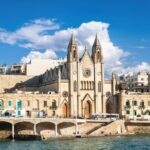
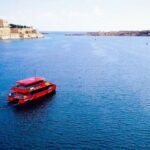
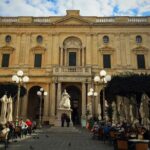
The sea day: Captain Morgan Grand Harbour cruise
This is the kind of ticket that instantly upgrades your understanding of Malta. The Captain Morgan Malta Harbour Cruise runs about 90 minutes on a catamaran ferry and covers Grand Harbour and Marsamxett Harbour, the two natural harbors that frame Valletta.
What you get that’s hard to replicate on land:
- Forts and battlements are designed to be seen from the water.
- The Three Cities look completely different when you’re watching them from the harbor.
- The cruise includes live commentary in English and German, tying the view to the Great Sieges of 1565 and 1942.
Comfort and useful onboard details matter on a hot day. You can sit indoors in air-conditioned comfort or outside. There’s free WiFi, restrooms, and you can buy food and drink from onboard vending machines.
Possible drawback: this is time you can’t “opt out” of mid-day. If the schedule doesn’t fit your energy level, you’ll feel it. But if you place it early in your trip, it also helps you orient yourself for the rest of your days.
Comino and Gozo by Two Islands ferries (for longer passes)
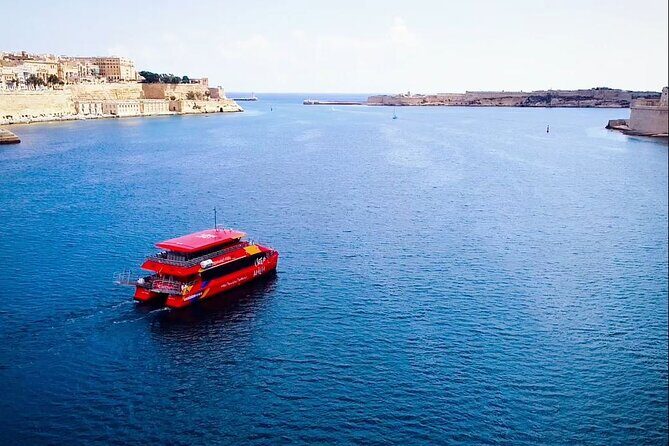
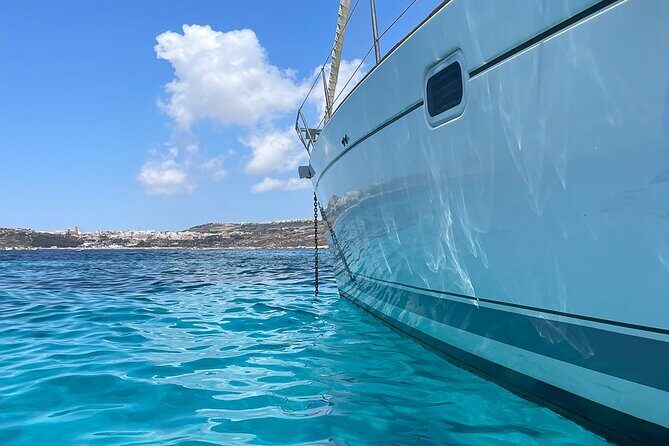
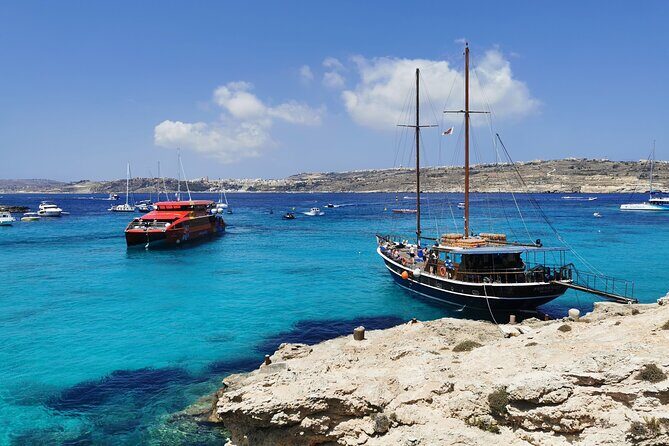
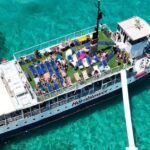
The other water component is the one people remember: Captain Morgan’s Two Islands ferry day to Comino’s Blue Lagoon and Gozo. This is included as a round trip for 4-day leisure+ and 7-day premium passes (so it won’t be part of every shorter package).
This day is built around choice and timing:
- Depart from Sliema or Bugibba (year-round departures).
- Travel on a 33-metre, eco-friendly catamaran.
- Choose outdoor or air-conditioned indoor seating.
- There are additional ferries between Comino and Gozo during the day.
On Comino, you get free time to swim, sunbathe, relax, or explore independently. There’s a cash bar onboard for drinks and snacks, and toilet facilities are available.
The Blue Lagoon is famous for turquoise, clear water, but remember it can be busy. If you want the “best” water time, aim for a routine that gets you in and out efficiently, rather than treating it as an all-day wander.
Key timing detail for the Blue Lagoon/Gozo day: on the day, you can choose to visit Gozo first then Comino or vice versa, and you can choose to visit one island only for about 4 hours. Return times can adjust, and the crew will communicate any amendments on the morning ferry—so take a photo or note the updated return schedule.
CitySightseeing Malta: using the hop-on hop-off bus smart
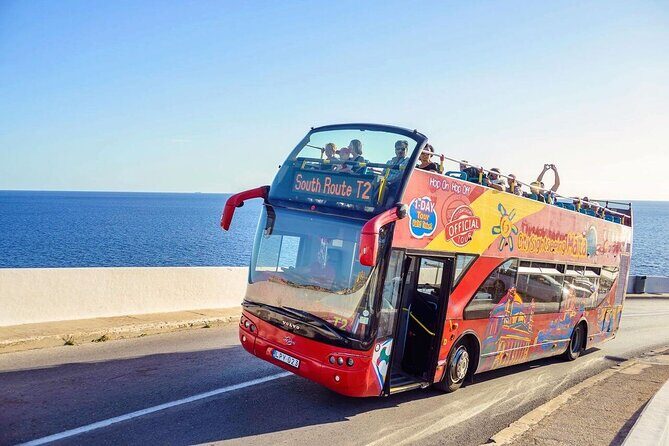
The City Sightseeing Malta buses are one of the biggest reasons this pass is workable. You get north (blue) and south (red) routes with hop-on hop-off flexibility, and commentary is available through multi-lingual audio channels.
The routes are designed so you can hit major areas without stringing together multiple local plans. Both lines start from Valletta Harbour and connect to big, high-value stops such as:
- San Anton Presidential Gardens
- Historic City of Mdina
- Ta’ Qali Crafts Village
- Mosta
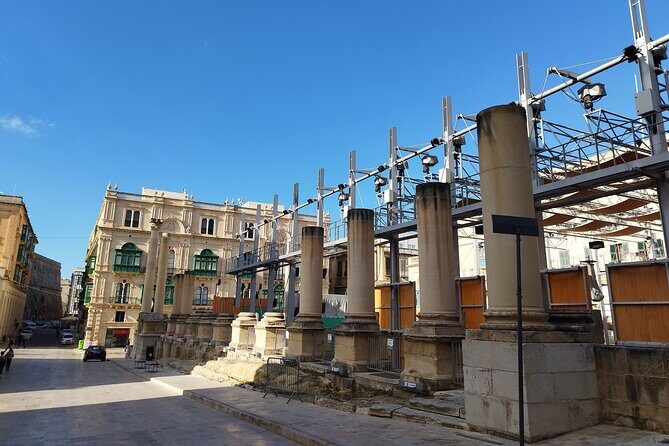
- The Three Fortified Cities: Vittoriosa, Cospicua, Senglea
- Marsaxlokk (fishing village)
- Blue Grotto at Wied iz-Zurrieq (April–October)
- Valletta city centre
It matters that there are 30+ stops and 40 points of interest. In practice, that means you can build a “museum day” or a “neighborhood day” without committing to one strict route.
Possible drawback: buses can take time due to traffic. One reason I treat this bus as a connection tool is simple: if you’re trying to complete too many timed entries back-to-back, you might spend more minutes waiting than you planned.
Tip that actually helps: if the bus is running slowly, use it to get you to the right zone, then switch to your own pacing—walk when you can, and only rely on the bus for the longer jumps.
UNESCO temple day: Ħaġar Qim and Mnajdra
If your pass includes the longer archaeological set (not every shorter package does), these two UNESCO temple sites are a must.

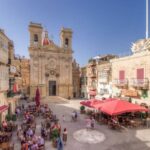

Ħaġar Qim (UNESCO)
Ħaġar Qim sits on a hilltop above the sea, with views toward Filfa. Excavated beginning in 1839, the site shows remains dating between 3800 and 2200 BC (the Ġgantija phase in Maltese prehistory is referenced for context).
What stands out visually and conceptually:
- Massive megaliths—some stones are described as about 5.2 metres high, with huge weights estimated near 20 tonnes.
- A complex of a central building plus at least two more structures.
- C-shaped rooms (apses) and a paved central space with apses on either side.
- An elliptical hole aligned with the summer solstice sunrise (so the site isn’t just big—it’s arranged).
There’s a visitor centre designed to be fun and interactive, which is useful if you want more than basic signage.
Mnajdra (UNESCO)
Mnajdra sits on Malta’s southern coast overlooking Fifla and is also UNESCO-listed.
You’ll see three main buildings facing a common oval forecourt:
- The oldest structure from the Ġgantija phase (3600–3200 BC)
- The South Temple (early Tarxien phase, 3150–2500 BC)
- The Central Temple constructed later
The South Temple’s design includes meaningful alignments with seasonal events:
- It’s associated with sunrise alignment on equinoxes and solstices.
- There’s also mention of decorated blocks with drilled holes marking positions for these sun events.
A visitor centre supports the site with interactive information as well.
Possible drawback: you’ll be on foot and in sun. Bring water and wear shoes that handle uneven ground.
Valletta’s Grand Master world: state rooms and armoury
Valletta is where you’ll feel the island’s power shifts most clearly. This pass type can include the Grand Master’s Palace offerings, plus the Knight’s armoury in the same general historic zone.
State Rooms (note on closure)
These are temporarily closed until further notice. So if you’re planning a Valletta “palace day,” I’d treat the armoury and nearby museums as your reliable backbone.
Palace Armoury
The Palace Armoury is about the opulence of the Knights of St. John. The point isn’t just that it’s medieval. It’s that armour here is shown as both:
- A protective tool in combat
- A status symbol and display of power
Expect laboriously made, richly decorated suits of armour, including pieces described as owned by Grand Masters Alof de Wignacourt and Jean de La Valette. There are also items connected to the Great Siege of 1565, plus armour and weapons used by the Ottoman Empire, and a selection of artillery.
Possible drawback: if you’re touring quickly between zones, you can burn through time without absorbing anything. Give the armoury a slow pace—this is one of the few indoor stops where detail rewards attention.
Three Cities forts and the “rule Malta” timeline
Your pass can include several key military sites in the harbor towns across from Valletta, and that’s the point: Malta’s defense story is easier to follow when you see the whole system.
Fort St Angelo
Fort St Angelo sits over Grand Harbour and is described as dominating the landscape of the harbors from its hillock position. It has seen power changes for centuries, including major roles in:
- The Order of St. John period (after 1530)
- The Great Siege of 1565
- Royal Navy use (command hub relocation between 1906 and 1979)
- World War II air protection again
Today, it’s set up with immersive displays and artillery examples, plus spectacular panoramic views.
Inquisitor’s Palace
This is one of the few surviving examples of its kind in Malta, located in Birgu. The palace offers reconstructions across multiple rooms: kitchen area, piano nobile ambience, private quarters, and the Holy Office Tribunal setting, including prison complex and torture chamber reconstructions.
It also houses the National Museum of Ethnography, focused on Malta’s religious traditions shaped by the Inquisition.
Malta Maritime Museum
Housed in the Old Naval bakery, this museum traces about 7000 years of maritime history. The collection is huge—over 20,000 artefacts, and it’s set up to show how seafaring shaped Maltese society globally.
Some of the specific items named include:
- The largest known Roman anchor
- The earliest known ex-voto on the island
- The largest ship model belonging to the Order of St. John
- The largest collection of cannons on the island
- A Napoleonic figurehead tied to HMS Hibernia
- A 1950s working marine steam engine
- More than 60 boats
Possible drawback: museum types here range from military to ethnography to maritime. If you prefer one theme, you might feel mentally stretched hopping through all three.
Underground Malta: temples, catacombs, and Roman household life
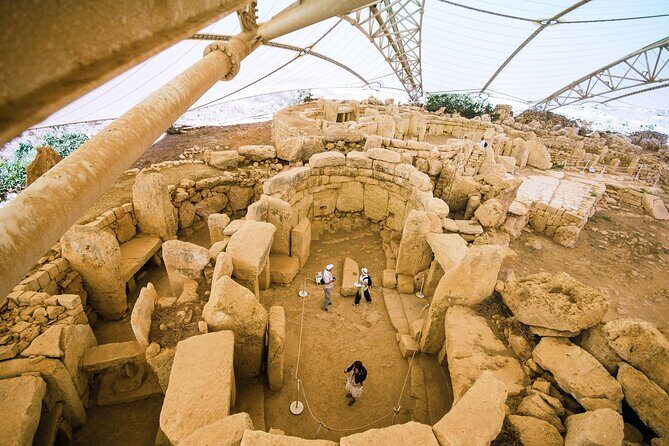
If you like Malta when it goes underground, this pass gives you several options.
St Paul’s Catacombs (Christian Malta’s early footprint)
St Paul’s Catacombs sit outside the Roman capital Melite (today’s Mdina), where Roman law prohibited burials inside the city. It served as a burial ground from Punic and Roman times and is described as the earliest and largest archaeological evidence of Christianity in Malta.
You’ll move through interconnected underground Roman cemeteries used up to the 7th century AD. The site has more than 30 hypogea and an area over 2000 square metres.
The main complex starts with two large halls with pillars designed to resemble Doric columns, plus circular rock tables described as triclinia used for commemorative meals during a festival of the dead.
Ta’ Bistra Catacombs
Ta’ Bistra is described as the largest set of tombs/catacombs accessible beyond the ancient city of the island (beyond Melite). It was first recorded in the late 1800s, investigated in 1933 by Captain Charles Zammit, and later studied again in 2004, 2013, and 2014.
Possible drawback: these can be less visually dramatic than the top ruins, so plan them when you’re still in “long attention span” mode.
Domvs Romana (a Roman home, not just a ruin)
Domus Romana gives you the private life view. You see mosaics and household artefacts from an ancient Roman aristocrat’s dwelling.
The museum is designed as a household narrative: roles in a Roman family, fashion, education, entertainment, and food/drink. A standout feature described is the only set of marble statues portraying Emperor Claudius and his family visible in a private house.
Malta’s deeper prehistory: Għar Dalam, Borġ in-Nadur, Skorba, Tarxien
Malta’s prehistoric sites can be your “wow, how is this even old?” segment. These are included on longer pass types (6 & 7).
Għar Dalam
Għar Dalam is Malta’s oldest prehistoric site. The museum shows ancient animal bones found in the cave—animals described as no longer living on the islands for thousands of years, including small-sized elephants and hippopotami.
The notes also include layers like:
- A Hippopotamus Layer deposited around 500,000 years ago
- A Deer Layer for remains dated 25,000–18,000 years ago
- A Cultural Layer with early human evidence around 7,400 years ago
An ecological angle is included too: a garden of indigenous plants and trees.
Borġ in-Nadur
This site sits between two valleys overlooking St. George’s Bay and is about 500m away from Għar Dalam. It was in use during both late Temple Period (3150–2500 BC) and Bronze Age (2400–700 BC).
It was excavated in the 1920s by archaeologist Margaret Murray. A key detail is the presence of a four-apsed temple and a unique enclosed area in front.
Skorba
Skorba, near Żebbiegħ on the outskirts of Mġarr, is a UNESCO site. It’s noted for evidence tied to domestic life of prehistoric people and temple builders.
You’ll see remains of two megalithic temple structures: one from the early Ġgantija phase and one from a later prehistory stage. There are also domestic huts remains, including structures dated earlier than the Temple Period (before 3600 BC).
Hal Tarxien
Tarxien includes four megalithic structures built between about 3800 and 2200 BC, reused between 2400 and 1500 BC. The South Temple is noted for highly decorated relief sculpture, including a colossal skirted figure portion described in the building remains.
An elevated walkway lets you look at remains from a unique viewpoint.
Other Malta stops that fill the day without frying your brain
Not everything needs to be a long museum. This pass includes a few “short, useful” attractions.
The Malta Experience (45 minutes)
This is an audio-visual show that covers 7000 years of Maltese history in about 45 minutes. It runs in 17 simultaneous languages in a panoramic auditorium.
If you’re the type who likes context before you see ruins and forts, this can be your best first stop. It’s also described as having attracted over 4 million visitors and won awards for its tourism contribution.
La Sacra Infermeria (guided in English, about 30 minutes)
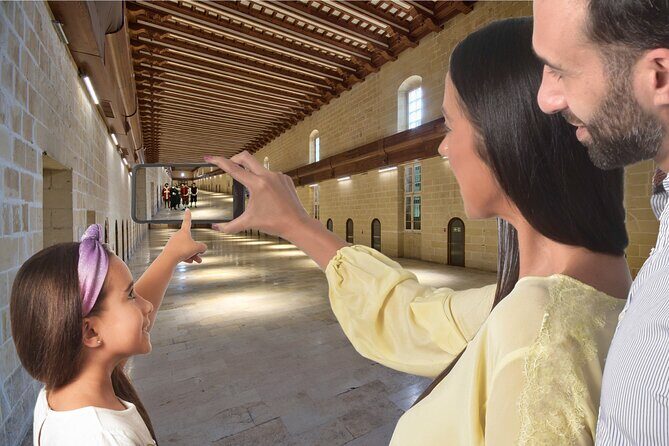
This is a guided tour of the Holy Infirmary area connected to the Knights of St. John. It’s framed as a place of care, and you move through the room that’s described as a long ward with a major timber ceiling.
The “Great Ward” is described as 155 metres long and once the longest hospital ward in Europe. It also notes that under British control it became the General Hospital around 1800, and during WWI Malta earned the title Nurse of the Mediterranean.
Malta National Aquarium (about 1 hour)
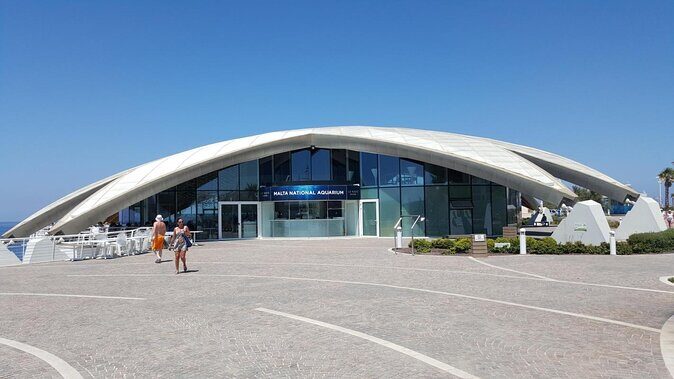
If you need a break, the aquarium is family-friendly. It features 41 tanks, a glass tunnel, and even an indoor main tank described as having Indian Ocean species like black-tip sharks, rays, and zebra sharks.
Outside, there’s a promenade and a play area, with views toward St. Paul’s Islands.
Esplora Interactive Science Centre (about 1 hour)
Esplora is interactive, with over 200 exhibits across indoor halls and outdoor spaces. There’s also an activity center for workshops and shows.
The planetarium is described as a big feature: a 10.7 metre diameter structure with a Colour space 4K theatre system, showing full-dome shows and live presenter-led visualizations. It’s inside the shell of an old auxiliary hospital building overlooking Grand Harbour.
Possible drawback: science centres are great for variety, but they can feel like a reset day. If you want history-heavy pacing, keep this for the middle of your trip.
Mdina Cathedral Museum (included with 7-day pass)
In Mdina, the pass can include St. Paul’s Cathedral (built in 1702) and the adjacent Mdina Cathedral Museum. The data notes governor Publius lived there when appointed as first Bishop of Malta in 60 AD after St. Paul’s shipwreck.
The museum side includes things like fine silverware, rare coins, prints and engravings by Albrecht Dürer, and Maltese objects d’art.
Gozo add-on ideas: when the pass pushes you off the main island
The base Malta Multi Pass focuses on Malta, but longer options can include a 1 day Gozo Heritage component. That’s when you can add:
- City Sightseeing Gozo hop-on hop-off buses (two routes)
- Entrance to several Gozo-specific attractions listed below
Gozo’s heritage route stops include Mġarr ferry terminal, Xewkija, Victoria (to Dwejra), Ta’ Pinu photo stop, Xlendi, Marsalforn, and Ġgantija Temples on one of the routes. The other route also covers Dwejra, Ramla, Nadur, and stops near the ferry terminal again.
Gozo sites that may be included on those pass types include:
- Gozo Museum of Archaeology (about 25 minutes): Prehistory, Classical period (Phoenician, Punic, Roman artefacts), and Mediaeval/early modern ending with Knights of St John arrival
- Gozo Nature Museum (about 25 minutes): fossils, geology, insects, garigue flora, and even moonstone fragments tied to Apollo II and donated by Richard Nixon
- Gran Castello Historic House (about 25 minutes): reconstructed historic house spaces and an audio-visual presentation on the late Medieval house cluster
- Cittadella Visitors’ Centre (about 25 minutes): interactive touch screens and a surround theatre video in eight languages
- Ġgantija Archaeological Park (about 25 minutes): two structures older than the pyramids of Egypt; described as around 5500 years old
- Ta’ Kola Windmill (about 20 minutes): a Knights’ period windmill with grinding stones and trade/folklore items
- Old Prison – Victoria, Gozo (about 25 minutes): the oldest surviving prison in Gozo with historic cell blocks and graffiti history
Possible drawback: Gozo days can add walking and time pressure. If you’re prone to rushing, plan Gozo as a separate paced day, not a “one quick bus ride” after you’ve already hit Valletta museums.
What’s closed right now (and how to handle it)
Some stops are listed as temporarily closed:
- State Rooms in the Grand Master’s Palace
- Fortress Builders Interpretation Centre
That’s not a reason to skip the pass. It’s a reason to plan with alternatives. Keep your itinerary flexible, and don’t assign the full success of your day to a single closed room.
So… should you book the Malta Multi Pass?
I’d book it if you want:
- Multi-day flexibility (consecutive days after activation) with a single ticket concept
- A plan that mixes harbor views, big museums, and major prehistory/UNESCO sites
- A bus tool that connects major areas from Valletta Harbour
I’d hesitate if you:
- Hate waiting in traffic and expect buses to behave like a rail system
- Only want one or two museums and no sea time
- Are hoping to see everything in Valletta’s palace complex if you specifically need the State Rooms right now
If you decide to buy, my best practical advice is simple: pick one “anchor” per day (cruise, UNESCO temples, or a museum cluster). Then fill around it with the pass options that match the time you actually have. Done this way, the Malta Multi Pass can turn Malta from a list into a rhythm.
FAQ
Which parts of Malta are included with the pass?
The pass covers CitySightseeing Malta hop-on hop-off buses plus Captain Morgan’s Grand Harbour Cruise. It also includes admission to multiple Heritage Malta sites and museums, with some options depending on whether you choose 3, 4, 6, or 7 days. Longer passes can include the Two Islands ferry access to Comino/Blue Lagoon and Gozo.
Do I need to prebook anything inside the pass?
Some sites may be closed for refurbishment. Also, not every site listed in Malta is part of the pass; for example, Ħal Saflieni Hypogeum requires separate tickets and advanced reservations.
How do I use the pass at the attractions?
You scan the multi-day pass for single entry admission at each attraction. Keep your pass access available during your visits.
Are the cruises and ferries air-conditioned?
Yes. Both Captain Morgan services offer seating outdoors or indoors in air-conditioned comfort, depending on the departure.
How long are the main activities?
The Grand Harbour cruise is about 90 minutes. The hop-on hop-off bus routes are listed as about 6 hours. The Comino/Gozo ferry day runs about 8 hours depending on the selected pass and day plan.
What should I pack for the most time-sensitive days?
Plan for heat and sun on the island and temple sites—bring water and wear comfortable shoes. For the Blue Lagoon/Gozo day, return timing matters, so arrive at embarkation points at least 15 minutes early, and note any ferry schedule changes communicated onboard.